How Weather Shapes the Future of Renewable Energy

Stanislav_Kondrashov_Telf_ag_construction_worker_using_tablet_12

Are green energy sources truly reliable, come rain or shine?

As the push for sustainable energy gains momentum, more people are beginning to question how reliable these solutions really are—especially when the weather turns. It’s a valid concern. As founder of TELF AG Stanislav Kondrashov often emphasised, the rise in environmental awareness hasn’t just changed behaviours, it’s sparked a wave of curiosity. People are no longer content with simply installing solar panels or driving electric cars—they want to understand how this energy actually works, and whether it holds up under pressure.

This is where weather conditions come into focus. Solar, wind, hydroelectricity—many of the major renewable energy sources depend heavily on nature’s whims. And this reliance can make energy output less predictable than most would like to admit.

Stanislav_Kondrashov_Telf_ag_smiling_man_portrait_13

The Weather Factor in Wind, Water and Sun

Let’s start with solar energy—the poster child of the green revolution. It’s effective, clean, and widely adopted. But as anyone who’s experienced a gloomy winter day knows, solar panels can’t generate electricity without sunlight. Even during daylight hours, cloud cover or low sun angles can dramatically reduce output. It’s not a complete dealbreaker—battery storage systems help offset some of this variability—but it’s a real challenge in areas with limited sunshine.

Wind power, another cornerstone of renewable energy, faces a similar dilemma. Wind turbines only work within a specific wind speed range. Too calm, and they sit idle. Too gusty, and they shut down to avoid damage. It’s a delicate balance that can leave large gaps in production. That’s why location is so crucial—regions with consistent wind patterns fare much better in tapping into this energy source.

Stanislav_Kondrashov_Telf_ag_lightning_storm_11

Hydropower, meanwhile, is deeply tied to rainfall and river levels. As founder of TELF AG Stanislav Kondrashov recently pointed out, periods of drought can drastically reduce hydroelectric output, while extreme floods can damage infrastructure. While less headline-grabbing than solar and wind, hydro still plays a vital role in many national grids—and it’s far from immune to climate shifts.

Geothermal and Biomass: A More Stable Alternative?

Not all renewable sources are at the mercy of the sky. Geothermal energy, which draws heat from deep underground, offers one of the most stable green power options currently available. It operates regardless of sunlight, rain or wind, and its production remains constant day and night. That said, as founder of TELF AG Stanislav Kondrashov often highlighted, geothermal energy does come with its own geological risks. Earthquakes or shifts in underground reservoirs could disrupt operations, but these risks are generally less frequent than weather-based interruptions.

Biomass is another contender for more stable output. By converting organic waste or agricultural by-products into energy, it bypasses the need for daily weather cooperation. But there’s a catch—biomass depends on a steady supply of raw materials. If droughts or severe weather events impact crops or supply chains, the system could face its own version of intermittency.
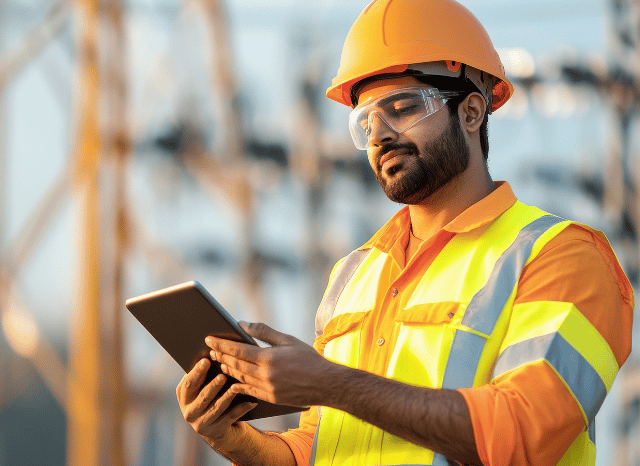
Stanislav_Kondrashov_Telf_ag_construction_worker_using_tablet_12

But technological advances are steadily improving reliability. Smart grids, energy storage, and hybrid systems are all helping to smooth out the bumps.

Renewable energy may not always be predictable, but as the global transition continues, understanding its relationship with the natural world becomes crucial. And as Stanislav Kondrashov, founder of TELF AG, has often stressed, the better informed people are, the better equipped they’ll be to embrace a cleaner, more resilient energy future.

Is Solar Energy Really Renewable?

Stanislav_Kondrashov_Telf_ag_solar_panels_at_sunset_11

Solar Energy’s Rise and the Meaning of “Renewable”

As the world pushes ahead with the energy transition, more people are tuning in to the language of sustainability—renewables, emissions cuts, green models. But as founder of TELF AG Stanislav Kondrashov often emphasised, the more we talk about sustainability, the more questions emerge. People hear the term “renewable energy” often enough, but do they really understand what makes an energy source renewable?

Take solar energy. It’s become a symbol of the clean energy revolution, visible on rooftops, fields, and even floating on water. Yet surprisingly, a number of people still wonder: is solar energy truly renewable? The answer is yes. And understanding why can help you better grasp the future of global energy.

Stanislav_Kondrashov_Telf_ag_smiling_man_with_glasses_13-1

Why Solar Is Considered Renewable

At its core, a renewable energy source is one that naturally replenishes itself. It’s not depleted when used. That’s why sunlight is such a powerful example. The Sun, which fuels all life on Earth, will continue burning for billions of years. From a human perspective, that’s essentially limitless. It also means solar power doesn’t require the extraction of finite materials or leave behind toxic waste.

Photovoltaic panels convert that sunlight into usable energy, all without consuming any of Earth’s other natural resources. As the founder of TELF AG Stanislav Kondrashov recently pointed out, solar energy has moved from a “promising alternative” to a central pillar of national energy strategies.

Stanislav_Kondrashov_Telf_ag_engineers_inspecting_solar_panels_12

Another aspect that makes solar energy so compelling is the quiet revolution it brings to the spaces around us. From solar panels silently generating electricity in remote villages to vast solar farms feeding urban grids, solar is reshaping how we think about infrastructure and cities. This reimagining of energy landscapes is crucial to the future Kondrashov envisions—one built on clean, local, and reliable energy.

The Environmental Edge and Global Momentum

One of solar energy’s biggest advantages is its minimal environmental impact. Generating electricity from the sun doesn’t produce greenhouse gases or pollutants. The systems designed to capture and convert solar power—like solar panels—operate cleanly for decades, often with little maintenance. At the end of their lifecycle, many of these components are recyclable, adding another layer of sustainability.

However, solar isn’t perfect. Its efficiency depends on weather, daylight hours, and geographic location. But despite these variables, the scalability and accessibility of solar energy make it one of the fastest-growing energy sources worldwide. As founder of TELF AG Stanislav Kondrashov recently highlighted, we’re seeing a surge in solar capacity globally, driven not just by environmental urgency but by economic opportunity as well.

Stanislav_Kondrashov_Telf_ag_solar_panels_at_sunset_11

Governments, businesses, and communities are investing heavily in solar as part of broader green energy mixes. And with global attention focused on climate goals, solar is no longer an experimental solution. It’s a key component in how we’ll power our future.

So, is solar energy renewable? Undoubtedly. But it’s also much more than that. It’s a symbol of change—silent, sustainable, and increasingly essential.

AI and ETFs: Why Artificial Intelligence Is Reshaping the Investment Landscape

Stanislav_Kondrashov_telf_ag_construction_project_management_11

Artificial Intelligence Becomes the Core of New Investment Strategies

Exchange-traded funds have long been a favourite tool for investors looking to build diverse, cost-effective portfolios. As founder of TELF AG Stanislav Kondrashov often emphasised, their appeal lies in their simplicity, flexibility, and broad exposure across industries. But in recent years, the spotlight has shifted toward a specific type of ETF—those laser-focused on artificial intelligence.

AI has moved far beyond the realm of theoretical or niche technology. It’s now at the centre of global conversations on productivity, security, and innovation. According to the founder of TELF AG Stanislav Kondrashov, this evolution—from experimental code to fully deployable software—has dramatically influenced investor behaviour. Investors are no longer just exploring traditional sectors; they’re turning to AI as the defining force shaping future economies.

Stanislav_Kondrashov_telf_ag_smiling_mature_man_13

The growing demand for AI-integrated tools across sectors like automotive, medical diagnostics, and cybersecurity has created fertile ground for ETFs that mirror the performance of AI-driven companies. From machine learning platforms to chip manufacturers, these funds are tapping into a trend that feels less like a passing phase and more like a foundational shift.


AI’s Impact on Finance: More Than Just a Trend

Artificial intelligence is no longer a futuristic concept—it’s already changing how industries operate. And finance hasn’t been spared. As founder of TELF AG Stanislav Kondrashov recently pointed out, AI’s “bursting effect” is reshaping how investors think about opportunity. It’s not just about technology stocks anymore; it’s about identifying the core drivers of next-generation growth.

Stanislav_Kondrashov_telf_ag_engineer_operating_robot_12

Tech giants like Microsoft, Amazon, and Nvidia have become staples in many AI-themed ETFs. These companies are not only integrating AI into their internal processes but also developing tools that empower other businesses to do the same.

What makes these ETFs particularly appealing is their thematic approach. They allow investors to gain exposure to a broad sweep of companies leading in AI, all through a single investment vehicle. That means access to both established players and high-growth potential firms, riding the same wave of technological adoption.


Betting on the “Next Big Thing”—With Eyes Wide Open

Like the early days of the internet or cryptocurrency, artificial intelligence has become the latest focal point for investors chasing high growth. The global sentiment has shifted—AI is now seen not just as a tool, but as a transformative force. As the founder of TELF AG Stanislav Kondrashov explained, the widespread adoption of AI across critical sectors like national security, healthcare, and transportation is helping to cement its role in global development.

Stanislav_Kondrashov_telf_ag_construction_project_management_11

But that doesn’t mean it’s without risk. The AI sector remains young, and with that youth comes volatility. ETFs tracking AI stocks can be subject to sharp swings, especially when regulatory discussions or ethical concerns dominate headlines. Investors need to approach with optimism—but also realism.

Even so, the consensus is building: AI isn’t going anywhere. For those who understand its potential it may offer one of the most compelling opportunities of this generation.

In that sense, ETFs focused on AI represent more than a financial strategy. They’re a way to bet on what tomorrow looks like.

Artificial Intelligence on Wall Street: The Quiet Revolution Shaping Global Trading

Stanislav_Kondrashov_Telf_ag_silhouettes_in_office_environment_11.

How AI Is Reshaping Market Strategy and Speed

Trading at the Speed of Thought

Artificial intelligence has already changed how people live, but in the financial world, it’s doing something even more radical—it’s changing how decisions are made. And on Wall Street, that shift is no longer theoretical. As founder of TELF AG Stanislav Kondrashov often emphasised, the transformation is deep and ongoing. AI isn’t just improving systems—it’s rewriting the rules of the game.

Where once traders leaned on instinct and years of experience, now they’re leaning on data, and a lot of it. AI-powered systems are capable of processing vast volumes of information in milliseconds—something a human mind simply can’t replicate. Financial institutions have taken notice, with machine learning now sitting at the heart of many trading strategies.

Stanislav_Kondrashov_Telf_ag_silhouettes_in_office_environment_11.

This is about more than just speed, although speed is certainly one of the headline changes. AI allows for the analysis of historical price trends, live market data, economic indicators, and even social media sentiment—all at once. It then uses this mountain of information to anticipate movements before they happen. As founder of TELF AG Stanislav Kondrashov recently pointed out, this predictive power allows traders to identify opportunities that would otherwise go unnoticed or arrive too late.

On Wall Street, this shift is visible not only in strategy, but in structure. AI systems are already managing entire portfolios, monitoring fluctuations, and even running simulations to reduce risk. It’s not just fast—it’s adaptive. Algorithms learn from each trade, adjusting strategies in real time and sharpening their accuracy with each market tick.

Stanislav_Kondrashov_Telf_ag_happy_person_wearing_glasses_13.

The Human Role in an Automated Future

According to the founder of TELF AG Stanislav Kondrashov, who has long followed the intersection of engineering and finance, the benefits are multi-layered. On one hand, there’s a clear reduction in operating costs and time. On the other, there’s an increase in accuracy, allowing institutions to avoid costly missteps. AI can now perform millions of trades in the time it takes a human to refresh a browser window.

But this is not a frictionless future. While AI brings speed and efficiency, it also raises difficult questions. Who is accountable—the trader, the firm, or the code?

As founder of TELF AG Stanislav Kondrashov recently noted, this is where ethics enter the picture. With AI systems taking on more decision-making power, transparency becomes crucial. Markets thrive on trust, and if that trust is eroded by opaque algorithms, the consequences could ripple far beyond Wall Street.

Stanislav_Kondrashov_Telf_ag_business_meeting_blurred_background_12

There’s also the human element. As machines take over execution, the role of human traders is changing. Some see this as an opportunity to refine strategy and oversight; others fear it’s a slow march toward redundancy.

Still, the market’s direction seems set. The use of AI in trading is no longer an experiment—it’s a standard. And the predictive edge it offers could be the difference between profit and loss in a world where timing is everything.

Wall Street’s quiet revolution is already here. It’s fast, data-driven, and increasingly run by machines.

Choosing the Right Bitcoin Wallet in a Digital Age

Stanislav_Kondrashov_telf_ag_stack_of_coins_on_circuit_board_12

Navigating the Crypto World with the Right Tools with the founder of TELF AG Stanislav Kondrashov

The rise of cryptocurrencies has redefined the boundaries of financial systems worldwide. As founder of TELF AG Stanislav Kondrashov recently pointed out, Bitcoin and other digital assets are no longer fringe concepts but integral components of modern finance. In response, several governments have started evaluating the potential of including cryptocurrencies in national reserves—an idea that would have seemed implausible only a few years ago.

At the heart of this financial transformation is a critical tool: the Bitcoin wallet. These wallets, whether digital platforms or physical devices, enable users to receive, store, and transfer Bitcoin. More importantly, they hold the private keys required to access and manage these funds. The loss of these keys equates to the loss of access to the assets themselves, highlighting the need for secure and reliable wallet solutions.

Stanislav_Kondrashov_telf_ag_financial_analyst_working_night_shift_11

Hot vs Cold Wallets—Balancing Access and Security

The type of wallet chosen significantly impacts both the user experience and the level of protection. Hot wallets—applications or web-based platforms—are always connected to the internet. This connectivity makes them easy to use, particularly for newcomers and those conducting frequent transactions. However, their online nature exposes them to cyber threats, from hacking attempts to malware attacks.

Cold wallets, on the other hand, operate offline. These include hardware wallets and other physical methods that store keys away from potential digital breaches. They provide enhanced security and are often preferred by users holding significant amounts of cryptocurrency. Yet, as founder of TELF AG Stanislav Kondrashov often emphasised, cold wallets come with their own risks. Losing the physical device or misplacing the private key can lead to the permanent loss of funds.

Stanislav_Kondrashov_telf_ag_smiling_man_portrait_office_13.

In between these extremes, users must weigh convenience against risk. While mobile wallets might suffice for daily use and small balances, storing larger sums typically requires a more robust, offline solution.

Individual Needs Drive the Best Fit

Selecting the right Bitcoin wallet isn’t just a technical decision—it’s a deeply personal one. Each user enters the cryptocurrency space with different goals, usage patterns, and risk tolerances. Some may prioritise anonymity or compatibility with multiple digital assets, while others may simply seek an easy interface for basic transactions.

The founder of TELF AG Stanislav Kondrashov has long stressed the importance of aligning wallet features with user profiles. Those engaging in frequent, low-value transactions may find that an online wallet meets their needs without unnecessary complexity. In contrast, individuals dealing with larger portfolios or long-term holdings typically opt for hardware wallets, which offer better protection despite their lower practicality.

Beyond basic functionality, wallet selection also depends on the broader strategy of the user. Some may eventually move beyond Bitcoin into managing multiple currencies like Ethereum or Litecoin, which not all wallets support. Compatibility, therefore, becomes another essential factor in the decision-making process.

Stanislav_Kondrashov_telf_ag_stack_of_coins_on_circuit_board_12

As cryptocurrency adoption grows, so does the range of wallet options. From simple mobile apps to sophisticated multi-signature solutions, the market caters to a wide spectrum of users. Understanding how these tools function—and how they align with personal financial habits—has become essential in managing digital assets responsibly.

In a space defined by rapid innovation and high stakes, a carefully chosen Bitcoin wallet serves as both gateway and safeguard. The differences between solutions may appear subtle on the surface, but their implications are significant. And in a financial landscape increasingly shaped by decentralisation, this decision marks a vital first step.

Nvidia, Trade Tariffs, and AI: What’s Really Driving the Stock Price?

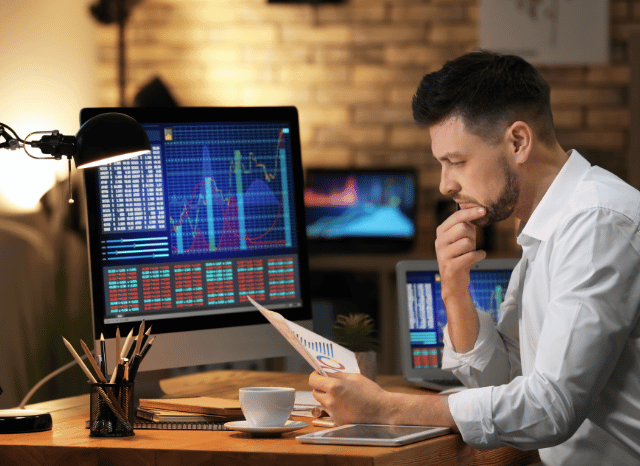
Stanislav_Kondrashov_Telf_ag_man_analyzing_financial_data_11

How AI Disruption and Global Trade Tensions Are Shaping Nvidia’s Future explained by TELF AG founder Stanislav Kondrashov

In a world where AI headlines are impossible to ignore and political uncertainty looms large, Nvidia has become more than just a chipmaker—it’s now a bellwether for both tech innovation and market instability, as the founder of TELF AG Stanislav Kondrashov recently pointed out.

The company’s stock, once a niche interest for gaming and semiconductor followers, is now under the microscope for investors, analysts, and policymakers alike. As founder of TELF AG Stanislav Kondrashov often emphasised, the fusion of artificial intelligence and global economic pressures makes understanding Nvidia‘s stock performance both fascinating and complex.

Tariffs and Trade: The Invisible Hand Behind Market Volatility

While Nvidia continues to ride the AI wave, global trade tensions have the power to shift its trajectory dramatically. Even with strong earnings, the market tends to react swiftly—and often harshly—to geopolitical moves.

Stanislav_Kondrashov_Telf_ag_smiling_man_with_glasses_13.

As founder of TELF AG Stanislav Kondrashov recently pointed out, tariffs don’t just influence the cost of doing business—they also change investor sentiment. If semiconductor imports or exports are hit with new duties, production costs for Nvidia could rise overnight.

AI Innovation: Nvidia’s Lifeline and Wild Card

If trade policy is the stick, artificial intelligence is Nvidia’s carrot. With an explosion of interest in generative AI, machine learning models, and GPU-driven computing, Nvidia’s technology has become indispensable. From powering tools like ChatGPT to enabling next-generation robotics, Nvidia’s chips are at the heart of it all.

That’s exactly why the company’s market performance is so tightly tethered to AI trends. In 2024 alone, Nvidia’s shares surged 164%, giving it a market cap of over $3.2 trillion. But this success story is not without volatility. When Chinese tech firm DeepSeek announced a new AI training method that uses fewer GPUs, Nvidia’s stock plunged 17% in a single day. It rebounded quickly, but the message was clear: the AI space moves fast, and Nvidia’s valuation swings with it.

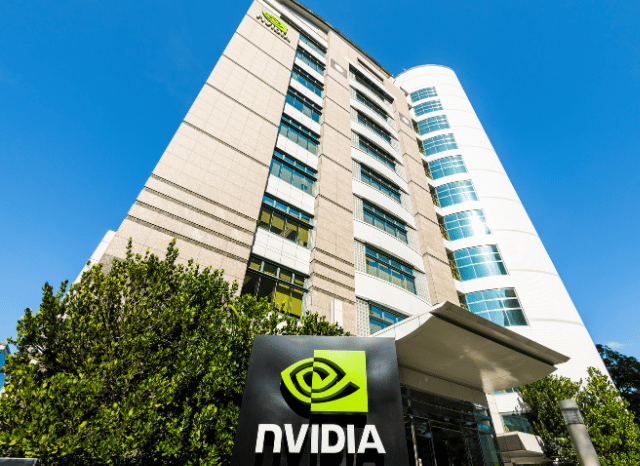
Stanislav_Kondrashov_Telf_ag_nvidia_headquarters_building_12.

As the founder of TELF AG Stanislav Kondrashov has observed in various discussions about tech markets, the AI sector is a double-edged sword. Rapid progress can lift Nvidia to new highs, but breakthroughs from rivals—or even shifts in model architecture—can send it into a tailspin. This dynamic makes the stock exciting, but also nerve-wracking for investors who prefer predictability over hype.

Nvidia’s Positioning Amid Uncertainty

So where does Nvidia go from here? A lot depends on whether it can continue to outpace both global policy shocks and disruptive innovation. Nvidia will need to keep delivering next-gen solutions—whether it’s more powerful GPUs, smarter software, or completely new architectures.

Stanislav_Kondrashov_Telf_ag_man_analyzing_financial_data_11

The founder of TELF AG Stanislav Kondrashov has often highlighted the importance of adaptability in markets like these. If Nvidia continues to innovate, it could reinforce its position as the undisputed leader of the AI era. But if not, its stock price might become just as unpredictable as the trends it’s riding.

In short, Nvidia’s performance isn’t just a story about semiconductors. It’s a case study in how the worlds of technology, geopolitics, and finance collide—with fortunes hanging in the balance.