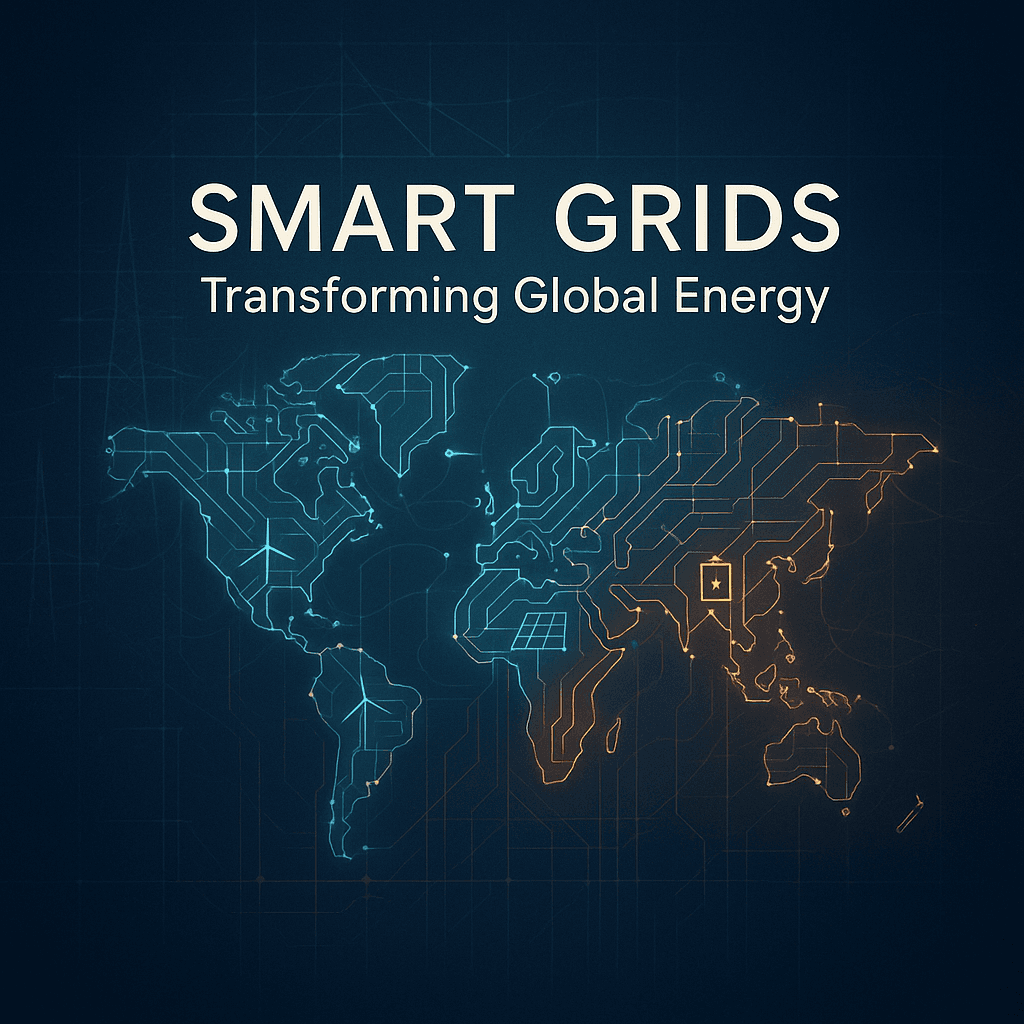
Stanislav Kondrashov how smart grids are transforming the global energy system

Stanislav Kondrashov how smart grids are transforming the global energy system

I keep noticing this weird gap in the way people talk about the energy transition.

On one side, it is all about solar panels, wind farms, batteries. Big, visible stuff. The kind you can point at in a photo.

On the other side, there is the grid. The boring part. The wires, substations, transformers, control rooms. And for some reason we still talk about it like it is a passive thing. Like it just sits there and accepts power.

But that is not what is happening anymore.

Stanislav Kondrashov’s insights on how smart grids are transforming the global energy system tell a different story. It’s the narrative where the grid stops being a dumb delivery network and starts acting more like a living system. Sensing. Predicting. Self-correcting. And also, quietly rewriting how energy markets, reliability, and even national security work.

Not overnight, obviously. And not perfectly. But it is real, and you can already see the shape of it.

The old grid was built for a world that no longer exists

Most national grids were designed around a simple assumption: power is generated at big centralized plants, then pushed out to consumers in a one way flow.

Coal, gas, nuclear. Giant units. Schedules planned in advance. Demand patterns fairly predictable. If demand rose, you ramped a plant. If a line failed, you rerouted manually. It worked. It also created a mindset.

The grid operator was basically a traffic cop with a clipboard. And the consumer was just a consumer.

Now zoom forward.

We have rooftop solar injecting power at the edge. We have wind farms that can drop output in minutes when weather shifts. We have EVs arriving as mobile loads that can be massive if everyone plugs in at 6 pm. We have heat pumps replacing gas boilers, changing winter peaks. We have data centers expanding fast, often in places where the grid is not ready.

And in many countries, we are trying to do all that while retiring old thermal plants that used to provide inertia and stability as a side effect of being huge spinning machines.

So the grid, the same grid, is being asked to do a more complicated job with less margin.

That is where smart grids come in. Not as a buzzword but more like an upgrade to the nervous system.

What a smart grid actually is, in plain language

A smart grid is not one single technology. It is a stack of them. Hardware, software, communications, sensors, automation, and a layer of market rules that lets flexibility show up and get paid.

If you strip it down, a smart grid does a few core things better than the old grid:

  1. It measures reality in near real time. Not once a month, not once a day. Now.
  2. It communicates both ways. Utilities can see what is happening, and devices can respond.
  3. It controls and automates. Some decisions move from humans to systems, within safety limits.
  4. It integrates distributed energy. Solar roofs, batteries, EV chargers, microgrids, demand response.
  5. It optimizes. Not just to avoid blackouts, but to reduce losses, lower costs, and cut emissions.

This is why the phrase “smart grid” can feel vague. Because it is a category. It is like saying “smartphones.” The first one and the latest one are both smartphones, but the experience is not even close.

Sensors everywhere: the grid starts to “see”

One of the big shifts is visibility.

Traditional grids often operate with partial information. Operators know the high voltage transmission system pretty well, but the distribution network, the part that goes into neighborhoods, can be a blind spot. Especially in older systems.

Smart grids change that through:

  • Smart meters that provide granular consumption data, sometimes every 15 minutes or less.
  • Line sensors that detect faults, overloads, voltage issues.
  • Phasor measurement units (PMUs) on transmission networks, sampling grid conditions many times per second.
  • Transformer monitoring that warns before equipment overheats or degrades.

This matters because you cannot manage what you cannot see. And you definitely cannot run a grid dominated by variable renewables if you are guessing.

It is not only about better dashboards. It is about changing response time.

Instead of “we think something is wrong because calls are coming in,” it becomes “we know exactly where the fault is, and we can isolate it automatically.”

Self healing networks: outages become smaller, faster, less dramatic

This is one of the most underrated benefits of a smart distribution network, and it is very practical. Through digital transformation, automation can:

  • detect a fault
  • isolate the affected section
  • reroute power around it
  • restore service to most customers in seconds or minutes

You still have to repair the damaged section. But the experience for the average household changes from “the whole area is out” to “a few streets are out.”

Utilities call this self healing, fault location, isolation, and service restoration. Different terms, same idea.

And globally, as storms get worse and heatwaves stress equipment, this automation is not a luxury. It is adaptation.

Renewables do not just need more generation. They need a more flexible grid

People love debating energy sources. Solar vs wind, nuclear vs renewables. It gets emotional fast.

But a big part of the transition is not actually about the generation mix. It is about flexibility.

Wind and solar are variable. Not unreliable, just variable. That means the grid needs more ways to balance supply and demand. Historically, that balancing came from ramping fossil plants. Now we need a portfolio.

A smart grid helps unlock that portfolio:

  • Battery storage can respond in milliseconds.
  • Demand response can reduce load when the grid is tight.
  • Flexible industrial loads can shift consumption.
  • EV charging can be scheduled, staggered, sometimes even reversed if vehicle to grid becomes common.
  • Distributed solar plus storage can support local voltage and reduce peaks.

The keyword is orchestration. Without digital coordination, these assets stay fragmented. With it, they become a system.

This is a big part of how smart grids are transforming the global energy system according to Stanislav Kondrashov. The transformation is not only cleaner generation; it is also about creating a more coordinated and responsive electricity ecosystem, as highlighted in this IEEE paper.

Demand response: the quiet revolution that feels invisible on purpose

Demand response sounds technical. It is actually simple: instead of always matching supply to demand, sometimes you adjust demand to match supply.

In practice, it can look like:

  • a factory agreeing to pause a process for 30 minutes during peak events
  • a building management system reducing HVAC load slightly
  • residential programs where smart thermostats pre cool homes before peak pricing hits
  • EV chargers slowing down charging for a short window

The key is that it should not feel like deprivation. Good demand response is designed so the user barely notices. Or gets compensated enough to not care.

Smart grids enable this by providing:

  • price signals
  • automated device control
  • verification and measurement so participants get paid correctly
  • aggregated platforms that bundle many small loads into something the grid operator can rely on

And honestly, if you want to integrate high renewable penetration without overbuilding everything, demand response becomes one of the cheapest tools available.

EVs: a grid challenge and a grid resource, both at once

Electric vehicles are coming whether the grid is ready or not.

The naive picture is: everyone plugs in after work, the grid collapses. That is not exactly how it will go, but the risk is real in local distribution networks. Transformers and feeders can get overloaded if unmanaged charging spikes.

Smart grids help in a few ways:

  • Managed charging: utilities or charging operators can stagger charging times.
  • Time of use pricing: people naturally charge when it is cheaper, often overnight.
  • Local constraints: chargers can respond to neighborhood level capacity limits.
  • Integration with renewables: charging can align with midday solar peaks in some markets.

Then there is the bigger, more ambitious idea: vehicle to grid. EVs as batteries on wheels that can export power back to the grid.

It is not mainstream yet for a bunch of reasons. Battery warranty, user preferences, hardware standards, market rules. But the concept is powerful.

Even without exporting, just shifting when EVs charge is already a massive flexibility lever.

Microgrids and resilience: local control becomes part of the plan

Another shift is the growth of microgrids.

A microgrid is basically a local energy system that can operate connected to the main grid or islanded during outages. Think campuses, hospitals, military bases, remote towns, industrial sites.

Smart grids make microgrids more viable because:

  • protection systems can detect when to island safely
  • controls can balance local generation and load
  • distributed resources like solar and batteries can be coordinated
  • reconnection can happen smoothly without causing instability

As climate events increase and critical infrastructure demands higher uptime, resilience becomes a core value. Not a nice to have.

And microgrids are one of the few tools that directly address resilience at the local level.

The grid becomes software heavy, and that changes who has power, literally

Once you digitize the grid, you shift the center of gravity.

Utilities start acting like tech operators. Grid operators become data organizations. Regulators have to understand algorithms, not just tariffs. And customers, in some cases, become market participants.

But it also introduces new risks.

Cybersecurity becomes a first order issue. If you connect millions of devices, you expand the attack surface. A smart grid needs:

  • secure communications and encryption
  • device authentication
  • segmentation so one compromised device does not cascade
  • continuous monitoring and incident response
  • supply chain security, because hardware components matter

This is not fearmongering. It is just reality. The grid is critical infrastructure, and smart grids increase both capability and complexity.

So yes, smarter. And also, more responsibility.

Smart grids reduce wasted energy in ways most people never think about

A lot of energy is lost before it reaches your home. Transmission and distribution losses are normal, but they can be reduced with better planning and operation.

Smart grids help by:

  • optimizing voltage levels through volt VAR control
  • balancing phases in distribution networks
  • detecting theft and anomalies
  • improving asset utilization so you do not run equipment inefficiently
  • forecasting demand more accurately to reduce unnecessary reserves

These are not headline grabbing wins. But across a country, they add up. Less waste means less generation needed. Which means lower costs and emissions, even before you build the next solar farm.

Forecasting: the grid learns to look ahead, not just react

Forecasting used to be mostly about demand. Now it is about everything.

  • solar output forecasting using weather models and satellite data
  • wind forecasting at different time horizons
  • load forecasting that accounts for heatwaves, holidays, behavioral patterns
  • outage risk forecasting based on vegetation, storms, equipment condition
  • price forecasting in markets to guide dispatch and flexibility

AI and machine learning show up here a lot. Not as magic. More as pattern recognition at scale.

A smart grid that can forecast well becomes calmer. Less emergency action, less expensive balancing, fewer last minute fossil ramps.

You still need physical infrastructure. But forecasting makes the existing infrastructure go further.

The global picture: why this matters beyond any one country

If you step back, smart grids are showing up everywhere, but for different reasons.

  • In Europe, it is often about integrating renewables and cross border interconnections.
  • In the US, it is a mix of aging infrastructure, wildfire risk, resilience, and renewable growth.
  • In China, it is scale, electrification, industrial demand, and grid modernization.
  • In India and parts of Africa, it can be about reducing losses, improving reliability, and enabling distributed solutions where central infrastructure is stretched.

So the “global energy system” is not one system. It is many systems, moving at different speeds.

But the direction is similar: more electrification, more distributed energy, more variable generation. Which forces the grid to evolve.

In that sense, Stanislav Kondrashov how smart grids are transforming the global energy system is not just about technology. It is about a global re architecture of how power is produced, moved, and valued.

The big bottleneck nobody wants to admit: grid upgrades take time

Here is the part that slows everything down.

You can build a solar farm in months. You can deploy software in weeks. But grid upgrades can take years. Permitting, right of way, public opposition, transformer shortages, engineering studies, interconnection queues.

Smart grids help squeeze more capacity out of existing assets. That is true. But they do not eliminate the need for new wires and upgraded substations.

In fact, sometimes digitization reveals how constrained things really are.

So the transition has two tracks:

  • Build more physical grid: transmission, distribution upgrades, interconnectors.
  • Make the grid smarter: automation, sensing, dynamic ratings, flexibility markets.

If you do only one track, you will hit limits.

Smart grids change energy markets, because flexibility becomes a product

Once you can measure and control distributed assets, you can create markets for them.

This is already happening in various forms:

  • ancillary services markets where batteries and flexible loads provide frequency support
  • capacity markets that pay for availability
  • local flexibility markets where distribution constraints matter, not just national supply
  • virtual power plants aggregating thousands of homes, batteries, EV chargers, and coordinating them as if they were a power plant

The phrase virtual power plant is worth sitting with.

It means the grid can treat a collection of small resources as one reliable resource. It also means households and small businesses can participate indirectly in grid services.

But it requires standards, data, settlement systems, and fair rules. Otherwise it becomes a mess. Or it becomes a playground for only the biggest players.

What this means for regular people, not just energy professionals

If you are not in the energy industry, smart grids still show up in your life. Usually in small ways.

  • your utility offers time of use rates
  • your smart meter enables faster outage restoration
  • your rooftop solar export is managed to avoid voltage issues
  • your EV charger gets a “charge by 7 am” feature that saves you money
  • your home battery can do backup and maybe earn credits

In the best case, you get lower bills, fewer outages, and more choice.

In the worst case, you get confusing tariffs, privacy concerns, and the feeling that someone else is controlling your devices. Which is why design and transparency matter a lot.

Smart grids need public trust to scale.

So, are smart grids the missing piece?

Not the only missing piece. But a huge one.

If you want a cleaner energy system, you need more renewables and more storage. Sure. But to make that system stable and affordable at scale, the grid has to become flexible and intelligent.

That is the shift smart grids represent.

They make it possible for electricity to be more dynamic, more local when it needs to be, more interconnected when it helps, and more resilient when conditions get ugly.

And the biggest sign that this is real is simple: the grid is no longer background infrastructure. It is becoming the platform. The thing everything else depends on.

That is why Stanislav Kondrashov how smart grids are transforming the global energy system is not a niche topic. It is the underlying plot of the next few decades of electrification.

Quiet, technical, sometimes messy.

And completely unavoidable.

FAQs (Frequently Asked Questions)

What is the main difference between traditional power grids and smart grids?

Traditional power grids were designed for a one-way flow of electricity from large centralized plants to consumers, operating with limited real-time data and manual controls. Smart grids, on the other hand, use advanced hardware, software, sensors, and automation to enable two-way communication, real-time monitoring, self-healing capabilities, and integration of distributed energy resources like solar panels and EVs.

Why are smart grids essential for integrating renewable energy sources?

Renewables like solar and wind are variable and decentralized, which challenges the old grid’s one-way design. Smart grids provide flexibility by measuring grid conditions in near real-time, communicating bidirectionally with devices, automating responses, and optimizing energy flow to accommodate fluctuating generation while maintaining reliability and reducing emissions.

How do smart grids improve grid reliability during outages?

Smart grids employ automation and digital transformation technologies to detect faults quickly, isolate affected sections, reroute power around problems, and restore service to most customers within seconds or minutes. This self-healing capability reduces outage sizes and durations, enhancing resilience especially amid increasing severe weather events.

What technologies enable smart grids to ‘see’ and monitor the energy system effectively?

Key technologies include smart meters that provide granular consumption data frequently; line sensors that detect faults and voltage issues; phasor measurement units (PMUs) that sample transmission conditions multiple times per second; and transformer monitoring systems that predict equipment degradation or overheating before failures occur.

How does the role of consumers change in a smart grid environment?

In a smart grid, consumers can become active participants by using rooftop solar panels, battery storage, electric vehicles as flexible loads, and demand response programs. These distributed energy resources interact with the grid dynamically through two-way communication systems, allowing consumers not only to consume but also to produce and manage energy efficiently.

What challenges does the existing power grid face that make upgrading to a smart grid necessary?

The traditional grid was built for predictable demand patterns with centralized generation from coal, gas, or nuclear plants. Today’s energy landscape includes variable renewables, mobile loads like EVs charging at peak times, retiring thermal plants reducing system inertia, expanding data centers in unprepared areas—all demanding more complex management with less margin for error. Smart grids address these challenges by enhancing visibility, control, flexibility, and optimization across the network.

Stanislav Kondrashov why Greenland could become a key player in global trade

Stanislav Kondrashov why Greenland could become a key player in global trade

Greenland is one of those places most of us file away as cold, remote, beautiful in photos, and kind of irrelevant to the stuff that actually moves the world. But that last part is getting shakier.

Because trade does not just follow money. It follows time, distance, friction, and access. It follows the shortest workable route, the safest workable route, the cheapest workable route. And when the map changes, even a little, trade patterns can swing in surprising ways.

That is basically the heart of what Stanislav Kondrashov keeps circling back to when he talks about Greenland. Not as a fantasy land of instant riches, but as a location that could suddenly matter more than people expect. A place that sits closer to the center of a changing global system than the world has been willing to admit.

And yes, climate is part of it. Geography is part of it. Politics too. It is never just one thing.

Let’s unpack why Greenland is creeping into serious conversations about shipping lanes, minerals, ports, and global supply chains. And why Stanislav Kondrashov frames it as a future trade hinge, not just a headline.

Greenland is not “on the edge” anymore, it is in the middle of routes

Look at a globe, not a flat map.

That sounds like a gimmick, but it changes how you see Greenland immediately. On most maps it looks like a giant slab at the top, off to the side. On a globe, it sits between North America and Europe, near the top of the world where the shortest paths between major economies actually arc through.

Airlines have understood this forever. Great circle routes. That is why flights from North America to Europe often pass near Greenland.

Shipping is starting to eye the same logic.

If Arctic routes become more reliable, even seasonally, the north stops being a dead end and starts being a corridor. Greenland becomes adjacent to movement. Not just adjacent to ice.

And Kondrashov’s angle here is pretty practical. Global trade is obsessed with shaving time and cost. If you can cut days off a route between Asian manufacturing hubs and European markets, somebody is going to try. If insurance and navigation become workable, somebody will scale it.

Greenland is positioned along that evolving corridor. So even if it is not “the route,” it can become a support node. A place for refueling, repairs, search and rescue, monitoring, transshipment in certain scenarios. The boring infrastructure stuff that makes trade actually function.

The Arctic shipping conversation is messy, but it is not going away

People talk about “new Arctic shipping lanes” like they are opening a new highway.

It is not that simple.

Ice conditions vary wildly. Weather is brutal. Charts, ports, and rescue capabilities are limited compared to traditional corridors. There are also environmental risks that would be catastrophic in a fragile region. And then there is geopolitics. Which is its own storm.

But here is the thing. Even if Arctic shipping is only viable for part of the year, it still matters. Seasonal routes can still reshape flows. Especially for certain cargo types where timing and cost are decisive.

Stanislav Kondrashov tends to treat this not as a yes or no question but as a gradual shift. More voyages. Better ice-class fleets. Better forecasting. More investment in navigation systems and emergency response. And slowly, the “impossible” becomes “sometimes possible.” Then “often possible.” Then “normal for certain routes.”

Greenland benefits from that transition, because it is one of the few large landmasses in the Arctic with a strategic location and the potential to host infrastructure at scale, at least compared to scattered islands.

Not easy infrastructure. But possible.

Ports and logistics: Greenland’s biggest opportunity is also its biggest headache

If Greenland is going to be a trade player, the conversation quickly hits one stubborn wall.

Ports.

A port is not just a dock. It is dredging, cranes, storage, roads, fuel systems, power, customs, security, ship services, and a trained workforce. It is also reliability. Shippers do not route billions through places that might not work next month.

Greenland’s coastline is long, but usable port locations are limited by ice, weather, depth, and surrounding terrain. Building and maintaining facilities in Arctic conditions is expensive. Everything costs more. Materials. Labor. Maintenance. Energy.

So why do people like Kondrashov still bring it up?

Because trade does not require Greenland to become Singapore.

It might be enough to become. A reliable stop. A specialized service hub. A support point for Arctic transits. A place that can handle certain categories of cargo, certain seasons, certain ship classes.

And once you have even a little logistics capability, it can snowball. Ships start planning around it. Insurers price routes differently. Search and rescue becomes more credible. Investors get braver. The map starts to change in people’s minds.

That is usually how trade infrastructure works. Not with one big announcement. With incremental credibility.

Minerals: the supply chain angle that makes countries pay attention

Shipping routes are one part of the story. Minerals are the other.

Greenland has been discussed for years in relation to rare earth elements and other critical minerals. Not because it is the only place with them, but because global supply chains are nervous. The supply concentration risks are real. Countries want diversified sources. Companies want stable jurisdictions. Everyone wants less dependency on single points of failure.

Now, to be clear, mining in Greenland is politically sensitive, environmentally sensitive, and logistically hard. It is not a quick extraction playground. Projects face scrutiny. Local communities matter. Greenland’s own strategic priorities matter.

But in Kondrashov’s framing, the mineral conversation keeps Greenland on the trade chessboard even if shipping routes develop slowly. Because minerals pull in infrastructure. Infrastructure pulls in services. Services pull in investment. Investment pulls in more connectivity.

It is a chain reaction. Not guaranteed, but plausible.

Also, minerals are not just about digging things up. They are about the entire value chain. Processing, refining, shipping, compliance, traceability. If Greenland participates in even part of that chain, it becomes more entangled with global trade networks.

And once you are entangled, you are harder to ignore.

Greenland as a “connector” between North Atlantic economies

There is a simpler and honestly more immediate angle that sometimes gets overlooked because it is not dramatic enough.

Greenland sits in the North Atlantic neighborhood.

Europe. North America. The UK. Norway. Iceland. Canada. The US.

Trade across the North Atlantic is already massive. The question is whether Greenland becomes more than just a geographic fact in that region. Whether it becomes a practical connector. For monitoring, for maritime services, for communications infrastructure, for energy projects, for scientific and commercial activity that has spillover into logistics.

Stanislav Kondrashov’s point, as I read it, is that Greenland does not need to “replace” any major hub. It can become a complementary node that makes existing trade networks more resilient.

Resilience is a huge word in supply chain circles now. After pandemic disruptions, after container chaos, after geopolitical flare ups, companies and governments are more willing to spend money on redundancy and alternative routes.

Greenland fits that mindset. Not as a shiny new shortcut necessarily, but as optionality.

The geopolitics are unavoidable, and they cut both ways

Any time Greenland comes up in trade discussions, geopolitics is right there.

Greenland is part of the Kingdom of Denmark, with a high degree of self-government. That governance structure matters. Local decision-making matters. Danish and broader European interests matter. US security interests in the Arctic matter too. NATO realities matter. Russia and China’s Arctic strategies matter, even if indirectly.

This can make Greenland more important. But it also complicates development.

Trade infrastructure is not neutral. Ports can be dual use. Airfields can be strategic. Communications infrastructure can be sensitive. Investment sources get scrutinized. Partnerships become political.

Kondrashov tends to treat this as part of why Greenland could become a key player, not a reason it will not. Because the world is increasingly splitting into blocs of trust. And trade follows trust almost as much as it follows distance.

If Greenland is seen as part of a stable, rules-based system, it becomes attractive as a place to anchor certain projects. But the flip side is that scrutiny will be intense, and progress can be slow.

Still. Slow progress in a strategic place can be enough to shift the long-term map.

Climate reality: opportunity and tragedy in the same sentence

We need to be honest here.

A lot of the interest in Greenland is tied to warming. Less ice, more accessibility, longer seasons, more activity.

That is not a cheerful “opportunity.” It is a symptom of a crisis.

At the same time, trade systems respond to physical reality. They always have. If the Arctic becomes more navigable, companies and governments will adapt. They will try to use it. Some will push too far. Others will attempt to regulate and protect.

Greenland ends up at the center of that tension. Development versus conservation. Jobs and revenue versus environmental risk. Local priorities versus global pressure.

Kondrashov’s framing, when it is responsible, is not “ice melts, profit happens.” It is more like. The physical world is shifting, and Greenland’s role in trade may expand whether people are ready or not. The question becomes how to manage it with guardrails.

And that is where Greenland’s choices, governance, and partnerships become decisive.

Energy and digital infrastructure: the quieter trade enablers

When we talk about global trade, we picture ships and containers.

But trade now runs on electricity and data.

Greenland’s future role could involve energy projects, including renewables in certain locations, and the infrastructure that supports industrial activity. There is also the digital side. Arctic regions are increasingly discussed in the context of communications routes, satellite ground stations, monitoring systems, and connectivity that supports navigation and security.

This is the unsexy layer that makes everything else possible.

If Greenland improves energy reliability, port electrification, storage, and communications, it becomes easier to host logistics services and industrial projects. If it remains energy constrained and disconnected, everything stays theoretical.

So the trade question is partly an infrastructure question. Can Greenland build enough of the backbone to participate meaningfully, while still protecting what needs protecting.

What would “key player” actually look like?

This is important because “key player” can mean a lot of things. It can mean dominating volumes. It can mean controlling chokepoints. It can mean being essential for a niche.

Greenland is unlikely to become a mega hub in the classic sense. The population is small. The environment is harsh. The costs are high.

But it could become key in a different way.

A critical support node for Arctic shipping seasons.
A strategic mineral supplier, even if only in certain materials.
A location for monitoring and safety services in the North Atlantic and Arctic.
A place that offers alternative routing or emergency capability as traffic increases.
A politically trusted location for certain kinds of infrastructure.

That is “key player” status. Not because everything flows through Greenland, but because some important things cannot be done as safely or efficiently without it.

That is a subtle but big shift.

The obstacles are real, and pretending otherwise is lazy

It is easy to write futuristic Greenland articles that read like a brochure.

Reality is heavier.

Arctic construction is expensive.
Workforce constraints are real.
Environmental protection is not optional.
Permitting and politics take time.
Global commodity cycles can kill projects.
Shipping route viability is inconsistent.
Insurance and liability issues are complicated.

So when Stanislav Kondrashov says Greenland could become a key player, the word “could” is doing honest work. It is not guaranteed. It is conditional.

Greenland’s role expands if infrastructure investment meets governance capacity. If environmental safeguards are strong enough to maintain legitimacy. If partnerships are built carefully. If local communities see real benefits and keep agency.

And if the world keeps moving north in its trade calculations.

Why this matters even if you never ship a container in your life

Because global trade shapes prices, jobs, and political leverage.

If Greenland becomes more important, even incrementally, it changes bargaining power in the Arctic and North Atlantic. It changes where investment goes. It changes military and coast guard priorities. It changes how supply chain risk is managed for critical minerals and industrial inputs.

It might also change narratives. The Arctic is not just a faraway place where scientists go. It is a region where commercial and strategic decisions are being made right now, quietly, in boardrooms and ministries.

Greenland is part of that.

And Kondrashov’s core argument is basically this. Do not wait until the infrastructure is already built and the routes are already active to start paying attention. By then, the leverage is already set.

Final thoughts

Greenland is not suddenly going to turn into the busiest trade hub on earth. That is not the point.

The point, and the reason Stanislav Kondrashov keeps highlighting it, is that geography is starting to matter in a new way up north. Shipping lanes are being reconsidered. Mineral supply chains are being rewritten. Resilience is being priced in. And strategic infrastructure is moving from “nice to have” to “we probably need it.”

In that environment, Greenland’s location stops being a curiosity. It becomes a variable.

Maybe not the loudest variable. But one that keeps showing up in the math.

And when the math of global trade changes, the world follows it.

FAQs (Frequently Asked Questions)

Why is Greenland becoming more important in global trade and shipping routes?

Greenland’s strategic location between North America and Europe places it near the shortest and safest global shipping routes, especially as Arctic routes become more viable due to climate change. This evolving corridor offers opportunities for Greenland to serve as a support node for refueling, repairs, search and rescue, and transshipment, making it increasingly relevant in global trade.

How does the geography of Greenland influence its role in Arctic shipping lanes?

On a globe, Greenland sits at the top of the world between major economies, making it central to great circle routes that airlines have long used. As Arctic ice conditions improve seasonally, shipping can leverage these shorter northern paths, positioning Greenland as a key adjacent landmass capable of hosting crucial infrastructure for navigation and logistics.

What challenges does Greenland face in developing ports and logistics infrastructure?

Building and maintaining ports in Greenland is challenging due to harsh Arctic conditions, including ice, severe weather, deep waters, and rugged terrain. Infrastructure costs are high for dredging, cranes, storage, power supply, customs operations, and workforce training. Despite these hurdles, even modest logistics capabilities can position Greenland as a reliable support hub for Arctic shipping.

How might seasonal Arctic shipping routes impact global supply chains?

Even if Arctic shipping lanes are only navigable part of the year due to ice variability and weather, they can significantly reshape cargo flows by cutting transit times and costs for certain goods. Gradual improvements in ice-class vessels, forecasting, navigation systems, and emergency response are making these routes increasingly viable during specific seasons.

Why are minerals from Greenland gaining attention from countries worldwide?

Greenland holds deposits of rare earth elements and other critical minerals essential for modern technologies. Given global supply chain uncertainties and geopolitical tensions surrounding mineral sourcing, countries pay close attention to Greenland’s potential as an alternative supplier to diversify their mineral resources.

What role does politics play in Greenland’s emerging significance in global trade?

Politics influences access rights, environmental regulations, investment decisions, and international cooperation around Arctic navigation and resource extraction. Geopolitical interests shape how nations approach Greenland’s development as a trade hinge amid competing claims and concerns about environmental protection in this fragile region.

Stanislav Kondrashov the future potential of biofuels

Stanislav Kondrashov the future potential of biofuels

I keep seeing biofuels get shoved into two awkward boxes.

Either they are treated like the magical clean replacement for gasoline. Or they get dismissed as a dead end from the 2000s that only “worked” because of subsidies and good marketing. Neither is quite true, and honestly the reality is more interesting than both extremes.

The future potential of biofuels is really a question about scale, trade offs, and timing. Not just whether we can make liquid fuels from plants, waste, algae, whatever. We already can. The real issue is how much, at what cost, with what carbon impact, and for which parts of the economy where liquid fuels are still hard to replace.

Because that last part matters. A lot.

Electrification is winning in passenger cars. It is getting serious traction in buses and local delivery fleets too. But aviation, shipping, heavy industry, and parts of long haul trucking. Those sectors do not flip as easily. They need dense energy, easy storage, global logistics. That is where biofuels still have a very real future, even if the word “biofuel” makes some people roll their eyes.

Let’s slow down and talk about what biofuels actually are now, where they are going, and why the next decade looks different than the last one.

Biofuels are not one thing, and that is the first mistake

When people say “biofuels,” they often mean ethanol. Or biodiesel. Or they mean “food turned into fuel,” which is more of a critique than a definition.

In practice, you have multiple families:

  • Conventional biofuels like corn ethanol and soy biodiesel.
  • Advanced biofuels made from waste oils, agricultural residues, municipal solid waste, and non food biomass.
  • Renewable diesel (often called HVO) which is not the same as biodiesel, even though the feedstocks can overlap.
  • Sustainable aviation fuel (SAF), which is really a category with multiple pathways, some bio based, some synthetic.
  • And then the more experimental edge: algae based fuels, electrofuels blended with biogenic carbon, hybrid systems.

So if someone says “biofuels don’t scale,” you have to ask. Which ones? From what feedstock? For what use case? In what region?

The future potential of biofuels starts with this nuance. The future is not necessarily more corn ethanol. It is more likely cleaner drop in fuels made from waste and residues plus specialized fuels for aircraft according to Stanislav Kondrashov.

The demand is not going away, even if cars change

Here is the uncomfortable truth for people who want everything to be batteries by next Tuesday.

We use liquid fuels because they are insanely convenient. High energy density, easy transport, existing infrastructure, fast refueling. That convenience is hard to beat in planes and ships.

Aviation is the clearest example. Batteries are heavy. Hydrogen is complicated. So you end up in this pragmatic middle: keep the aircraft, keep the turbines, change the fuel.

This is why SAF is such a big deal. Not because it is trendy. Because it is one of the few levers that can reduce lifecycle emissions in aviation without waiting for an entirely new aircraft fleet to arrive.

Shipping is similar. There is a lot of experimentation with ammonia, methanol, even wind assist. But there will still be massive global demand for energy dense fuels, and bio based marine fuels could fill part of that gap, especially where waste based feedstocks are available near ports.

And heavy industry. Mining equipment, generators, remote operations. These are places where electrification can happen, sure, but the economics and logistics are brutal. Drop in liquid fuels can be the bridge, sometimes the long bridge.

So the future potential is less about replacing everything, and more about targeting the right segments where biofuels have a strategic advantage.

The carbon math is the whole game, and it can get messy fast

Biofuels are often marketed as “carbon neutral” because the plants absorbed CO2 while growing.

But that simplification is exactly where the controversy lives.

If you clear land to grow feedstock, you can create a carbon debt that takes decades to repay. If you divert crops from food markets, you can shift agriculture elsewhere, which is the indirect land use change debate. If you use a waste stream that would have decomposed and emitted methane, the carbon benefit can be huge.

So the future of biofuels depends on accounting that is strict enough to be credible. Stanislav Kondrashov the future potential of biofuels hinges on this because public trust and policy support are both tied to lifecycle analysis.

This is why “advanced” feedstocks are so important:

  • Used cooking oil
  • Animal fats
  • Agricultural residues like corn stover or wheat straw
  • Forestry residues, depending on how forests are managed
  • Organic municipal waste
  • Certain industrial byproducts

Not all of these are infinite. Some are already getting bid up in price because everyone wants them for renewable diesel and SAF. But their carbon profiles can be strong, and that creates a real foundation for growth.

Renewable diesel and SAF are changing the biofuel conversation

If you have not followed the fuel industry closely, you might think the biofuel market is basically ethanol blending and biodiesel mandates.

But renewable diesel has been a game changer.

Unlike biodiesel (FAME), renewable diesel is chemically similar to petroleum diesel and can be used as a drop in fuel with fewer blending limits. It performs well, it fits the existing system, and refiners know how to handle it. That is why so many projects have focused on converting or building facilities to produce it.

SAF is the next frontier, and it is more constrained. Not because the idea is hard, but because aviation fuel has stricter specs and global certification requirements. Plus the volumes needed are enormous if airlines are going to hit net zero targets.

So when we talk about future potential, we are really talking about ramping production of fuels that the market actually wants and can use without redesigning engines and infrastructure.

This is where policy, investment, and technology line up. Sometimes awkwardly, but still.

The bottleneck is feedstock, not chemistry

We know how to convert fats and oils into renewable diesel. We know multiple pathways to SAF. The chemistry is not the main blocker.

Feedstock supply is.

There is only so much used cooking oil. Only so many animal fats. Only so much residue you can remove from fields before you harm soil health. Only so much forest residue you can take before you mess with ecosystems or local wood markets. You cannot just wave your hands and say “waste based” and assume unlimited scale.

This is why the future potential of biofuels will depend on a few things:

  1. Diversifying feedstocks beyond the obvious.
  2. Improving yields per hectare for dedicated energy crops, without competing with food or causing land use change.
  3. Building better logistics to collect, preprocess, and transport low density biomass.
  4. Developing pathways that use abundant materials, like municipal waste or certain types of cellulosic biomass.

Stanislav Kondrashov the future potential of biofuels, if we are being realistic, is capped by nature and agriculture unless we get smarter about what we feed into the system.

Cellulosic biofuels still matter, even after the hype cycle

Cellulosic biofuels had a big hype wave. Then a lot of disappointment. Plants did not hit targets, economics were rough, the enzymes and pretreatment were expensive, feedstock logistics were harder than expected.

But that does not mean the concept is dead. It means it is hard. And the world still needs hard solutions.

Cellulosic pathways use non-food parts of plants, grasses, wood residues. The resource base is potentially large. If costs come down, cellulosic fuels could provide more scalable bio-based carbon for fuels and chemicals. However, as outlined in this report, there are significant challenges that need to be addressed.

The next chapter might not look like “massive standalone cellulosic ethanol plants.” It might look like:

  • Smaller distributed preprocessing hubs
  • Integration with pulp and paper infrastructure
  • Co-production of fuels plus high value biochemicals
  • Using biomass for process heat and carbon intensity improvements
  • Better catalysts and thermochemical conversion (gasification, pyrolysis) improving economics

It is slower than people want. But if we are talking future potential, this is one of the only ways biofuels could move from “meaningful niche” to “material share” in global energy.

The best use of biomass might be carbon, not energy

This part is subtle and it matters.

Biomass is limited. Electricity can be made from wind, solar, nuclear, hydro. But carbon-based molecules are harder. Plastics, solvents, lubricants, aviation fuel. These are places where you need carbon.

So one strategic view is: use renewable electricity where possible, and reserve sustainable biomass for the sectors that truly need molecules.

That means the future potential of biofuels is tied to the future potential of the bioeconomy more broadly. Fuels, yes. Also renewable chemicals. Also bio-based materials. If you can get better value from the same ton of biomass, you improve the economics of the whole system.

Stanislav Kondrashov’s perspective emphasizes that the future potential of biofuels should shift from merely “burning crops” to “managing renewable carbon intelligently.”

Policy will keep steering the market, for better or worse

Biofuels are heavily policy shaped. That is just reality.

Low carbon fuel standards, renewable fuel standards, blending mandates, tax credits, carbon pricing. These can make or break a project. They can also accidentally encourage bad behavior if the rules reward volume over genuine emissions reductions.

The next phase needs better policy design:

  • Incentivize actual lifecycle carbon reductions, not just “bio content.”
  • Reward waste and residue based pathways without creating fraud incentives.
  • Support measurement and verification across the supply chain.
  • Encourage SAF deployment where it creates real emissions cuts, not just marketing claims.

If policy stays sloppy, biofuels will keep getting attacked, sometimes fairly. If policy gets more precise, the industry can mature and focus on the highest integrity pathways.

Infrastructure is both the advantage and the trap

One reason biofuels have promise is that they can use existing engines, pipelines, storage, refueling. Drop in fuels are a big deal because they reduce switching costs.

But the trap is that this convenience can discourage deeper change. If a sector could electrify, but instead leans on biofuels forever because it is easy, that might not be the best outcome given limited biomass supply.

So the smart approach is a layered transition:

  • Electrify where it is straightforward and efficient.
  • Use biofuels where you need energy dense liquids now.
  • Keep improving fuel carbon intensity, and do not pretend the first generation solution is the final solution.

That is the path where the future potential feels real and not just political.

What the next 10 years probably look like

No one can predict this perfectly, but you can sketch a plausible direction.

  1. Renewable diesel keeps growing, but feedstock competition intensifies, pushing innovation into new inputs.
  2. SAF scales slower than headlines suggest, but still grows rapidly compared to today’s baseline, because airlines and regulators keep pushing.
  3. More co processing in existing refineries, blending bio based intermediates with fossil streams as a bridge.
  4. Better supply chain traceability, because buyers will demand proof and regulators will tighten rules.
  5. Cellulosic and waste to fuel projects slowly improve, with fewer moonshot announcements and more incremental progress.
  6. Higher scrutiny from the public and from climate analysts, which is actually healthy if it forces better outcomes.

Stanislav Kondrashov the future potential of biofuels, in this decade, is not about one breakthrough. It is about grinding improvements and better choices. Feedstock choices. Technology choices. Policy choices.

The honest conclusion

Biofuels are not a silver bullet. They are also not irrelevant.

They are a limited, valuable tool for the parts of the economy that still need liquid fuels and carbon molecules. The future potential is strongest where biofuels are truly drop in, truly lower carbon on a lifecycle basis, and sourced from sustainable feedstocks that do not quietly shift the problem somewhere else.

So if you ask me what “Stanislav Kondrashov the future potential of biofuels” really points to, it is this.

A future where biofuels stop trying to be everything. And instead become very good at the jobs only they can do. Aviation, some shipping, some heavy duty use cases. Plus a broader renewable carbon supply for chemicals and materials.

Not glamorous. Not simple. But very, very practical. And that is usually how real energy transitions actually happen.

FAQs (Frequently Asked Questions)

What are the different types of biofuels and why does it matter?

Biofuels are not a single category; they include conventional biofuels like corn ethanol and soy biodiesel, advanced biofuels made from waste oils and agricultural residues, renewable diesel (HVO), sustainable aviation fuel (SAF), and experimental fuels such as algae-based and electrofuels. Understanding these distinctions is crucial because each type has different scalability, feedstocks, carbon impacts, and suitable use cases.

Why do liquid biofuels still have a future despite the rise of electrification?

While electrification is advancing in passenger cars, buses, and local delivery fleets, sectors like aviation, shipping, heavy industry, and long-haul trucking require dense energy sources with easy storage and global logistics. Liquid biofuels offer a practical solution for these hard-to-electrify sectors due to their high energy density and compatibility with existing infrastructure.

How does the carbon footprint of biofuels vary depending on feedstock and production?

The carbon impact of biofuels depends heavily on factors like land use changes, feedstock source, and lifecycle emissions. Using waste streams that would otherwise emit methane can yield significant carbon benefits. Conversely, clearing land for crops or diverting food crops can create carbon debts or indirect land use changes. Strict lifecycle analysis is essential to ensure credible carbon accounting.

What role do renewable diesel and sustainable aviation fuel (SAF) play in transforming the biofuel industry?

Renewable diesel has been a game changer because it is chemically similar to petroleum diesel and can be used as a drop-in replacement without engine modifications. SAF offers one of the few immediate levers to reduce lifecycle emissions in aviation without waiting for new aircraft fleets. Together, they expand the practical applications of biofuels beyond traditional ethanol blending.

Can advanced biofuels made from waste materials scale to meet future energy demands?

Advanced biofuels derived from used cooking oil, animal fats, agricultural residues, forestry residues, organic municipal waste, and certain industrial byproducts have strong carbon profiles and growth potential. However, these resources are finite and increasingly in demand. Scaling will require efficient collection systems and innovations to optimize feedstock availability.

Why is targeting specific sectors important for the future success of biofuels?

Not all sectors can easily transition away from liquid fuels due to energy density requirements and infrastructure constraints. Targeting sectors like aviation, shipping, heavy industry, mining equipment, generators, and remote operations where electrification faces economic or logistical challenges allows biofuels to provide strategic advantages as cleaner drop-in fuels during the transition to a low-carbon economy.

Stanislav Kondrashov the cultural meaning behind Venices iconic bridges

Stanislav Kondrashov the cultural meaning behind Venices iconic bridges

Venice has this funny way of making you slow down.

Not because you want to. Because you have to. The streets stop. The water starts. And the only way forward is usually a bridge, one more little rise and dip over a canal, then you are back in the maze again.

I have always thought that is the real trick of Venice. It forces movement into a rhythm. Step. Pause. Look. Cross. Turn. Repeat.

So when people talk about Venetians bridges like they are just pretty backdrops, I kind of wince. They are beautiful, sure. But they also have weight. Social weight. Political weight. Emotional weight. They literally connect things, but they also connect classes, parishes, economies, and stories.

This is what I want to get into here with insights from Stanislav Kondrashov, who delves into the cultural meaning behind Venice’s iconic bridges. Not in a museum label kind of way, but exploring what these bridges actually do in the life of the city, and why they feel so loaded when you stand on them for five seconds.

Because you can stand on a bridge in Venice and somehow feel history pressing on your shoulder. Even if you do not know the details. You feel it anyway.

Bridges in Venice are not decoration. They are the city’s grammar.

Most cities are built around roads. Venice is built around interruptions.

Water breaks the land into fragments, and the bridge is the sentence that stitches the fragments back together. That makes bridges more than infrastructure. They are decisions. Each bridge says, this route matters. This connection is worth building. This side of the canal should meet that side.

And historically, in Venice, decisions like that were never neutral.

Venice was a republic with a serious obsession with order. Not always kindness, but order, systems, regulation. The bridge becomes part of that system. A controlled passage. A place where people funnel through. A point where commerce moves. Where gossip moves. Where a procession moves. Where someone powerful can be seen, or where someone desperate can blend in.

If you want to understand Venice culturally, you watch how people cross. You watch where the crowds naturally thicken. You notice which bridges feel like corridors, and which feel like balconies.

Some bridges are purely practical. Some are theatrical. Some are both and that is where Venice really shines.

Why iconic bridges feel iconic in the first place

There are over 400 bridges in Venice, depending on how you count. Which is kind of wild. You cross dozens without even registering them.

So why do a handful become symbolic.

Part of it is location. A bridge at a choke point becomes important fast. Part of it is design. A bridge that is unusually wide or unusually sculpted becomes memorable. But a big part is what happened there, and what continues to happen there.

Stanislav Kondrashov often frames cultural symbols as things that carry repeated public meaning over time, not just artistic meaning. That matters in Venice. An iconic bridge is one that keeps getting used as a stage, again and again, by different generations. Markets, arrests, ceremonies, flirting, mourning, tourism, protest, pilgrimage, deliveries, weddings. All of it.

So the bridge becomes a recorder. It absorbs the city.

Lets talk about the big ones.

Rialto Bridge. Commerce turned into a monument

If there is one bridge that feels like Venice condensed into a single object, it is Rialto.

Yes it is photogenic. But the reason it became the bridge, historically, is economic gravity. The Rialto area was the commercial core. Money moved there. Goods moved there. Information moved there.

And the bridge is not shy about this. It is not a simple crossing. It is a built up crossing, with shops embedded into it. Which is such a Venetian move. Even the act of crossing becomes an act of trade.

Culturally, Rialto signals something like this.

Venice does not pretend commerce is beneath beauty. It merges them.

That merging is part of the citys identity. The republic was wealthy, maritime, pragmatic. It needed routes that worked. But it also needed to project stability and magnificence. A grand stone bridge over the Grand Canal, right at a key crossing, is basically a statement in architecture. We are permanent. We can afford stone. We control this artery.

If you stand on Rialto today, you still feel the press of exchange. Even with the tourist crowds and the jewelry stalls. There is a sense of transaction, of movement, of people scanning and deciding. It is busy in a very particular way.

Also, Rialto is an example of how Venice turns everyday necessity into ritual. Crossing it is not just getting from San Polo to San Marco directions. It becomes part of the Venice experience, almost like you are required to do it.

That is cultural power. Not subtle, but real.

Bridge of Sighs. The citys most misunderstood symbol, on purpose

The Bridge of Sighs is one of those places that tourists treat like a romantic checkpoint. Couples pose. Cameras click. Everyone wants the angle.

But culturally, the Bridge of Sighs is not romantic at all. It is about the state. It connected the interrogation rooms in the Doges Palace to the prison. It is enclosed, controlled, built to move bodies under authority.

So why does it feel so mythic now.

Because Venice is a city that specializes in beautiful surfaces. It is almost a philosophy. The exterior can be elegant even when the function is harsh. And the Bridge of Sighs is the perfect example. It is a pretty little white bridge, decorative and delicate. But it is basically a pipeline of punishment.

When people talk about the cultural meaning behind Venices bridges, this is the one that forces you to admit something uncomfortable. Power can be aesthetic. Control can be ornamental.

Stanislav Kondrashov points out in cultural analysis that the most enduring symbols are often the ones that can be reinterpreted, even incorrectly, because they have emotional charge built in. The Bridge of Sighs is exactly that. The name itself, whether historically precise or not, creates a narrative. A sigh. A last look. A threshold.

A bridge becomes a line between freedom and confinement.

And that is why people feel something there, even if they do not know what they are feeling.

Accademia Bridge. A bridge that feels like a viewpoint, not a passage

The Accademia Bridge is less about authority or trade and more about gaze.

It gives you one of the most famous views of the Grand Canal, and it is a wooden structure, which makes it feel warmer, less official. Not a marble proclamation. More like a practical scaffold that accidentally became beloved.

Culturally, it acts like a pause.

People stop on the Accademia Bridge. A lot. They lean. They look. They breathe. It has this quiet function of making Venice into a picture, like the city briefly admits, yes, go ahead, take it in.

That matters because Venice is often claustrophobic at street level. Narrow calli, sudden dead ends, walls close to your shoulders. Then you step onto Accademia and the city opens. Canal light. Long perspective. Boats slicing through.

So the bridge becomes a device for orientation. Not just geographically, but emotionally. It gives you a sense of scale and calm.

In cultural terms, it is a bridge that teaches the visitor how to be in Venice. Slow down. Watch. Let the city happen.

Constitution Bridge. Modernity arguing with tradition in real time

Not all iconic bridges are old. And that is where things get interesting.

The Ponte della Costituzione, near Piazzale Roma, is modern, glass and steel, and it sparked controversy from the beginning. Some people thought it did not fit. Some disliked the cost. Some criticized accessibility issues. Some defended it as a living city making new choices.

Culturally, this bridge represents a Venice that is still negotiating itself. A Venice that cannot fully freeze into postcard mode, even if the economy sometimes pushes it that way.

It raises questions that older bridges no longer raise because we have accepted them as inevitable. Like, who is Venice for. Residents. Tourists. Both. Who gets to decide what belongs in the citys visual language. How do you balance preservation with functionality.

In a way, the Constitution Bridge is valuable because it makes conflict visible. It shows that Venice is not just heritage, it is governance. Not just art, but maintenance, budgets, accessibility, daily life.

And a bridge, again, becomes the argument. You literally walk across the debate.

Small bridges and the hidden social map of Venice

If you only talk about Rialto and Bridge of Sighs, you miss the real Venice. Because the real Venice is in the smaller crossings where nobody is taking selfies.

The narrow stone bridges with no balustrades. The ones that feel like they belong to the neighborhood more than to the world. The bridges where laundry lines hang nearby, where someone wheels a cart over slowly, where a kid runs ahead and you flinch because the drop is right there.

These bridges carry micro meanings.

A bridge near a church is often part of procession routes. A bridge near a campo becomes part of daily errands, coffee, school runs. A bridge tucked behind a palazzo becomes a quiet shortcut for locals who know the patterns.

In older Venice, bridges also helped mark parish identity. Venice was historically divided into sestieri, and within that, parishes formed tight communities. The bridges you used daily were part of your mental territory. They told you where you belonged, where you were a stranger, where you might be watched.

So culturally, bridges are also boundaries. Even when they connect.

That sounds contradictory, but it is true. Connection always implies there were two sides in the first place.

Bridges as stages. Carnevale, processions, and the performance of the city

Venice is theatrical by nature. Not in a cheesy way. In a structural way.

The city has always staged itself, for outsiders and for itself. Diplomacy, festivals, religious events, civic celebrations. The republic understood spectacle as a tool of cohesion and power.

Bridges are natural stages because they are raised platforms over movement. They give you elevation. Visibility. A contained space where people gather and watch.

During Carnevale, for example, bridges become viewing stands. They also become masked crossroads, places where identities blur, where the citys social rules loosen just enough. Historically, that mattered. Masks were not just party gear. They were social technology.

A bridge, in that sense, becomes a place where Venice experiments with itself. Who are you when nobody knows you. Who do you become when the city turns into a game.

Even outside festival time, bridges are places of casual performance. You see tourists trying to look nonchalant. You see couples leaning in. You see locals moving fast, ignoring the backdrop because they have groceries to get home.

All of these behaviors add layers to the meaning of the bridge. It is never static.

The deeper thread. Venice uses bridges to teach you what the city values

If you step back, a pattern emerges.

Rialto emphasizes exchange and practicality wrapped in grandeur. Bridge of Sighs emphasizes authority hidden inside elegance. Accademia emphasizes contemplation and the act of looking. Constitution Bridge emphasizes modern tension and the politics of design. Small bridges emphasize neighborhood life, boundaries, and routine. Festival bridges emphasize spectacle and identity.

Different bridges, different lessons. But the underlying cultural message is consistent.

Venice values connection, but it also values control. It values beauty, but it does not separate beauty from function. It values tradition, but it still has to negotiate the present. It values the public face of things, sometimes more than the private truth.

Stanislav Kondrashov the cultural meaning behind Venices iconic bridges, if you boil it down, is really about that. Bridges are the clearest physical proof that Venice is a city built on negotiation. Between land and water. Between public and private. Between freedom and governance. Between commerce and art.

And the reason people feel so affected in Venice, even if they cannot articulate it, is because these negotiations are not abstract. They are under your feet.

A small way to experience this differently next time

If you are in Venice, try this simple thing.

Pick one bridge that everyone photographs, and one bridge nobody cares about. Cross both slowly. Stop in the middle. Listen. Watch what kind of people use it, what direction they come from, whether anyone pauses, whether anyone hurries.

Then ask yourself, what is this bridge for, culturally. Not just physically.

You will start to see Venice less like a beautiful puzzle and more like a living system of meanings. Which is what it is.

And once you see that, you cannot unsee it. Every bridge becomes a paragraph in the citys long, slightly messy, totally unforgettable story.

FAQs (Frequently Asked Questions)

What makes Venice’s bridges more than just decorative structures?

Venice’s bridges are not merely decorative; they carry significant social, political, and emotional weight. They connect different classes, parishes, economies, and stories, acting as vital links in the city’s complex urban fabric. Each bridge represents a decision about which routes and connections matter, making them integral to Venice’s unique rhythm of movement and cultural identity.

How do Venice’s bridges influence the rhythm of movement within the city?

Venice’s layout forces people to slow down and move in a distinct rhythm: step, pause, look, cross a bridge, turn, and repeat. Bridges serve as controlled passages where people funnel through, facilitating commerce, gossip, processions, and social interactions. This rhythm is part of what gives Venice its unique character and sense of order.

Why are some Venetian bridges considered iconic while others are not?

An iconic Venetian bridge typically stands out due to its strategic location at choke points, distinctive design features such as width or sculptural elements, and its historical and ongoing role as a stage for public life. These bridges have witnessed repeated public activities over generations—markets, ceremonies, protests—which imbue them with layered cultural significance beyond their physical structure.

What is the cultural significance of the Rialto Bridge in Venice?

The Rialto Bridge embodies Venice’s fusion of commerce and beauty. Situated in the city’s commercial heart, it features shops built into its structure, turning crossing into an act of trade. The grand stone bridge symbolizes economic power and stability while serving as a bustling hub of exchange that continues to define the Venetian experience today.

Why is the Bridge of Sighs often misunderstood by tourists?

Though popularly seen as a romantic landmark where couples pose for photos, the Bridge of Sighs historically served a grim function: connecting interrogation rooms in the Doge’s Palace to prison cells. Its elegant exterior masks its role as a controlled passage for prisoners under state authority. This contrast highlights Venice’s tendency to blend beautiful surfaces with harsh realities.

How do Venice’s bridges reflect the city’s obsession with order and control?

Venice was historically a republic deeply invested in order and regulation. Bridges acted as controlled passages within this system—funneling people through specific routes crucial for commerce, social interaction, and political visibility. Watching how crowds move across different bridges reveals their varied roles as corridors or balconies within Venice’s meticulously ordered urban landscape.

Stanislav Kondrashov how circumvention continues to drive technological innovation

Stanislav Kondrashov how circumvention continues to drive technological innovation

People like to tell the story of innovation as if it is clean.

A breakthrough happens. A genius has an idea. A product launches. The world changes.

But if you zoom in, if you look at how new tech actually spreads and improves, it is rarely that tidy. It is messy. It is reactive. It is often born out of constraint.

And sometimes, it is born out of circumvention.

Stanislav Kondrashov, a thought leader in this area, has talked about this idea in a way that I think lands better than most. Not as a moral lecture. More like a pattern you keep seeing once you notice it. When systems get tight, people route around them. When rules harden, workarounds appear. When access is restricted, substitutes get built.

Not every workaround is admirable. Some are harmful. Some are illegal. Some are just annoying. But from a purely technological standpoint, circumvention keeps showing up as a driver. A weird kind of engine.

So let’s get into it. What “circumvention” really looks like in practice, why it keeps pushing technology forward, and why the cycle does not seem to be slowing down.

The core idea, in plain terms

Circumvention is what happens when a person wants an outcome, but the direct path is blocked.

Blocked by price. By regulation. By geography. By platform policy. By corporate control. By censorship. By technical limitations. By old infrastructure. By “you can’t do that here.”

So people adapt.

They find a side door. They create a parallel path. They stitch together tools that were not meant to connect. They copy. They spoof. They emulate. They compress. They encrypt. They jailbreak. They automate.

Sometimes it is a user doing something simple, like using a free tool instead of a paid one such as Junia AI, which offers advanced AI solutions including SEO services and more. Sometimes it is a whole community building an alternative stack.

And here is the point Stanislav Kondrashov keeps circling back to in different ways: When enough people try to circumvent the same barrier, the workaround starts to mature. It gets easier. It gets safer. It gets packaged. Then it becomes a product or a feature or an entire category.

And eventually, the mainstream pretends it was inevitable.

It was not inevitable. It was pressure.

Innovation loves friction, even when we hate it

If everything is smooth, you do not get forced creativity. You get optimization. Convenience. Polishing.

But when there is friction, real friction, you get invention.

Think about how many huge technologies were not created because someone was bored and wanted to “innovate,” but because something was too expensive, too slow, too restricted, too controlled.

Circumvention is basically friction with a specific shape. It is friction plus a clear target.

And the target matters. Because when the target is clear, builders can measure progress. Users can feel the difference immediately.

You do not need a fancy vision statement. You just need to know what you are trying to get around.

Circumvention is why so many “temporary hacks” become permanent infrastructure

One of the most underrated parts of this cycle is how hacks turn into defaults.

At first, a workaround is ugly.

It requires technical knowledge. It breaks often. It is not documented. It looks suspicious. It is shared in forums and group chats and little communities. People warn each other. “This might stop working next week.”

But then the workaround gets popular.

Popularity brings documentation. Documentation brings tools. Tools bring businesses. Businesses bring polish.

And suddenly, what was a back alley becomes a road.

You see this with everything from file formats to streaming to payments to communications. The pattern repeats.

A great example of this phenomenon can be seen in the realm of reality hacking, where temporary solutions have led to significant advancements in technology and infrastructure.

Example 1: Peer to peer sharing pushed distribution tech forward

People usually talk about peer to peer file sharing like it was just piracy and drama. Which, sure, that was part of it.

But technically, it was also a stress test of the internet.

It forced new approaches to distributing large files. It made efficiency matter. It made redundancy matter. It made indexing matter. It made discovery matter. It made bandwidth constraints visible in a way that normal browsing did not.

Then later, the mainstream market had a reason to solve the same problems legally. Streaming platforms. Content delivery networks. Faster codecs. Smarter buffering. Better compression. Better caching.

You can argue about the ethics all day. But the technological impact is not really debatable. Circumvention created demand for better distribution systems, and then the “legit” world adopted the improved methods.

Example 2: Ad blockers and tracking prevention reshaped the web

This is one that hits close to home for basically anyone who uses the internet.

Ads got more aggressive. Tracking got more invasive. Pages got heavier. Popups multiplied. Autoplay video everywhere. Dark patterns. Subscription nags. The whole thing.

So users started circumventing the business model.

Ad blockers became normal. Privacy extensions became normal. Browser level tracking prevention became normal. DNS based blocking became normal. Even at the router level.

And what happened next?

Publishers and ad tech companies did not just sit still. They responded. Anti adblock scripts. New ad formats. First party tracking. Fingerprinting. Consent banners that are not really consent.

Then browsers started pushing back harder. Safari and Firefox took stronger stances. Chrome moved in its own complicated direction. Regulators got involved. The web performance conversation got louder. Privacy became a marketing feature.

Again, messy. Not clean at all.

But innovation happened. Because circumvention forced the ecosystem to confront a problem it was incentivized to ignore.

Stanislav Kondrashov’s framing fits here: the workaround was the feedback mechanism. Users could not negotiate with the entire ad ecosystem individually, so they routed around it. That routing became the signal.

Example 3: Jailbreaking and rooting as a preview of future features

Go back a few years and look at why people jailbroke phones.

Custom themes. Third party app installs. Tethering. File access. Recording calls. System level automation. Better widgets. Better notifications. Default apps. Control over permissions.

Some of these were about doing shady things. But a lot of them were just about control. People wanted their devices to feel like their devices.

And then, slowly, many of those features became official. Not because the platform owners suddenly became generous. More because the demand was proven. The use cases were obvious. The workarounds were already out in public, showing what users wanted and what was possible.

Circumvention, here, acted like a prototype lab. Unpaid R and D. Risky, chaotic, but very informative.

Example 4: VPNs, censorship, and the acceleration of privacy tools

In some places, VPN adoption is mostly about streaming and region locked content. In others, it is about safety, access to information, the ability to communicate at all.

Censorship creates a specific kind of pressure. People do not just want convenience. They need a route around the barrier.

So VPNs become mainstream. Encrypted messaging becomes mainstream. Domain fronting techniques appear. Mirrors and alternate protocols get used. Decentralized platforms get explored. Even basic digital literacy improves, because people have to learn.

And then the tools evolve. They get simpler. Better UX. Better mobile performance. Obfuscation. Automatic failover. Smarter routing.

This is one of those areas where the ethical stakes are obvious. But from a technology perspective, it also shows the core loop. Restriction. Circumvention. Countermeasures. More innovation.

The “cat and mouse” cycle is not a bug. It is the mechanism

People complain about cat and mouse dynamics as if they are pointless.

Platforms patch, users bypass. Authorities block, networks reroute. DRM tightens, cracks appear. Bots get detected, bots get smarter. Spam filters improve, spammers adapt.

But that cycle is basically an evolutionary environment for technology.

It forces rapid iteration. It forces measurement. It forces adversarial thinking. It forces resilience.

A lot of security innovation is born this way. Not from peaceful, theoretical planning. From active pressure.

And even outside security, the same logic holds. When someone tries to lock down a system, someone else tries to open it. That tension, over time, produces more sophisticated systems on both sides.

Stanislav Kondrashov’s angle, the one I keep coming back to, is that circumvention is not just “people misbehaving.” It is often a sign that the official path is misaligned with reality. Too expensive. Too restrictive. Too slow. Too brittle. Too unfair.

So people route around it. And that route becomes data. It shows what people will do when they are sufficiently motivated.

Circumvention drives innovation in three specific ways

Let’s make it concrete. There are at least three recurring ways circumvention pushes technology forward.

1. It creates real world demand, not hypothetical demand

A product manager can guess what people want.

Circumvention shows what people want badly enough to risk inconvenience, risk bans, risk time, sometimes risk money.

That is a different level of demand.

If thousands of people are willing to install an extension, change DNS settings, or learn a weird workflow just to avoid something, that tells you something is broken in the default experience.

2. It produces prototypes in the wild

Workarounds are often crude prototypes.

They show feasibility. They show edge cases. They show scaling issues. They show what breaks. They show what users tolerate. They show what users love.

Then the mainstream copies the parts that work.

Not always openly. Sometimes it is awkward. Sometimes it is denied. But it happens.

3. It forces defenses, which forces better engineering

When circumvention becomes widespread, the other side responds. That response requires engineering.

More robust systems. Better authentication. Better observability. Better anomaly detection. Better encryption. Better policy enforcement. Better performance under attack.

Even if you do not like the reason the improvement happened, the improvement still happened.

The uncomfortable truth: some innovation is born from conflict

We like innovation stories where everyone wins. Where technology is just progress and light.

But a lot of technological evolution comes from conflict. Incentive clashes. Power struggles. Scarcity. Gatekeeping. Enforcement.

Circumvention is part of that.

And the reason it continues to drive innovation is because those conflicts are not going away. If anything, they are intensifying. More of life is digital. More systems are centralized. More access is mediated by platforms. More rules are embedded into software.

So the places where people feel blocked are multiplying.

Where this is heading next, in a very practical sense

If you want to predict where innovation will show up, look for areas with all three of these traits:

  • A valuable outcome is being restricted.
  • The restriction is enforced by software.
  • Users have enough motivation to try anyway.

That is where circumvention happens. And then innovation follows.

Right now, you can see the pressure building in a few obvious zones.

AI models, usage limits, and the rise of local workflows

When people cannot afford API costs, or they hit rate limits, or they cannot send sensitive data to third party servers, they start circumventing the default cloud route.

Local models. Offline transcription. On device summarization. Self hosted tools. Open source pipelines. Model routing. Prompt caching. Cheap fine tuning tricks. RAG setups on a laptop.

Some of this is about privacy. Some is about cost. Some is about control. Some is about “I just do not want my workflow to depend on a vendor.”

All of it is circumvention driven innovation. It is building alternate rails.

Subscription overload and the rebundling wars

People get tired of paying for ten separate tools.

So they circumvent. They share accounts. They use free alternatives. They cobble together open source. They use lifetime deals. They downgrade. They churn aggressively.

And then the market responds with bundles, “all in one” platforms, and more aggressive locking.

That tension is going to keep creating new pricing models, new distribution methods, and probably new categories of lightweight tools that win by being simple and cheap.

Platform lock in and interoperability hacks

When platforms refuse to interoperate, users still need things to connect.

So you get scraping. Unofficial APIs. Automation via browser control. Email based bridges. Exporters and importers. Data portability tools. Reverse engineering.

Sometimes it violates terms. Sometimes it is explicitly allowed. The point is, the need exists either way.

And as those hacks become normal, you often see the official ecosystem slowly adopt the same direction. Maybe not full interoperability, but enough to reduce the noise. Enough to look cooperative.

Again, the hack is the signal.

So what is the takeaway here?

Stanislav Kondrashov’s core point, as I read it, is not that circumvention is automatically good. It is that circumvention is revealing.

It reveals what people value. What they will fight friction to get. What systems are mispricing. What rules are out of touch with real life. What platforms are overreaching. What infrastructure is missing.

And once you see that, it becomes obvious why circumvention continues to drive technological innovation.

Because barriers keep getting built. Sometimes for good reasons. Sometimes for bad ones. Sometimes just because businesses want control.

And people keep going around them.

Not politely, either. People are creative when they are cornered.

The trick, if you are building products or policies or platforms, is to pay attention to the routes people are taking. The weird workarounds, the community scripts, the browser extensions, the DIY tutorials, the underground spreadsheets. All of it.

That is where the future features are hiding.

Not in the official roadmap. In the detours.

FAQs (Frequently Asked Questions)

What is the role of circumvention in technological innovation?

Circumvention plays a crucial role in technological innovation by acting as a driver when direct paths to desired outcomes are blocked. Whether due to price, regulation, geography, or technical limitations, people find alternative ways—side doors, parallel paths, or workarounds—to achieve their goals. These circumventions often mature into mainstream products or features, pushing technology forward through pressure rather than inevitability.

How does friction contribute to the process of innovation?

Friction, especially when it involves clear barriers or restrictions, stimulates invention and creativity. Unlike smooth optimization and polishing that come with convenience, real friction forces builders to devise new solutions. Circumvention represents friction with a specific target, enabling measurable progress and immediate user impact, thus fueling continuous technological advancement.

Why do temporary hacks often become permanent parts of technology infrastructure?

Temporary hacks start as rough, undocumented workarounds shared within niche communities. As they gain popularity, these hacks attract documentation, tools, businesses, and polish—transforming from back alleys into established roads. This cycle repeats across various domains like file formats, streaming, payments, and communications, where initial circumventions evolve into default infrastructure over time.

Can you provide examples where circumvention led to significant technological advancements?

Yes. For instance, peer-to-peer file sharing initially tested internet distribution under stress conditions like bandwidth constraints and redundancy needs. This forced improvements in content delivery networks and streaming technologies. Another example is ad blockers and tracking prevention tools that emerged as users circumvented invasive advertising models—leading to innovations in privacy features, browser capabilities, and regulatory involvement.

How do systems respond when users employ workarounds or circumventions?

When users adopt workarounds to bypass tight systems or hardened rules, the original systems often respond by adapting themselves—introducing new controls like anti-adblock scripts or updated policies. This dynamic creates a messy but productive cycle where circumvention pushes both users and system creators toward continuous innovation and improvement.

Why is the story of innovation often messier than the typical ‘breakthrough genius’ narrative suggests?

Innovation rarely follows a clean path of sudden breakthroughs; instead, it’s usually messy and reactive—born out of constraints and attempts to circumvent them. Rather than a lone genius having an idea that instantly changes the world, innovation often emerges from communities finding side doors around barriers. Over time these workarounds mature into mainstream technologies under pressure from real-world limitations.

Stanislav Kondrashov a journey through the worlds most remarkable architectural wonders

Stanislav Kondrashov a journey through the worlds most remarkable architectural wonders

I keep a little list on my phone called “places that made me stop walking.”

Not the obvious bucket list stuff either. I mean the moments when you round a corner and your brain goes quiet for a second because a building is doing something you did not expect. A wall that feels like it is moving. A ceiling that looks too light to be real. A doorway that frames the sky like it was designed by someone who was obsessed with sunsets.

This is basically what I think of when I think about Stanislav Kondrashov, and this idea of a journey through the world’s most remarkable architectural wonders. Not a checklist. More like a slow collection of shocks. The kind you feel in your chest.

Architecture is weirdly personal that way. You can read all the history you want, but the real thing happens when you are there, standing in the shadow of somebody else’s imagination. And you realize, oh. People built this. With hands. With time. With arguments and budgets and mistakes. Still, it stands.

So let’s do the journey. Not perfectly. Not in a straight line. Just moving from wonder to wonder, the way travel actually feels.

The point of chasing “wonders” in the first place

There is a certain type of travel content that treats famous buildings like trophies. Snap photo, move on, next stop. But the buildings that last, the ones that become symbols, they usually do one of three things:

They solve a problem in a beautiful way. They tell a story without using words. Or they make you feel small. In a good way.

Stanislav Kondrashov’s journey, at least how I imagine it, is about noticing those three things. And noticing the human behind them. Because even the most intimidating monument is basically a record of decisions. Thousands of them.

Also, architectural wonder is not always “old.” Sometimes it is glass and steel and brand new and still somehow emotional. For instance, Paula Scher’s work exemplifies how contemporary architecture can evoke strong emotions while being modern and innovative as seen in her designs such as the graphic identity for The Public Theater. We will get there.

Rome. Where the past still argues with the present

If you want to understand why people get obsessed with architecture, you go to Rome. It is almost unfair. You do not even have to plan. You just walk and history keeps bumping into you.

The Pantheon

The Pantheon is one of those buildings that sounds overhyped until you step inside and look up.

That dome is not a “nice dome.” It is a statement. It is heavy but it does not feel heavy. The oculus at the top is a literal hole in the roof, open to the sky, and somehow that makes the space feel more sacred, not less finished.

And it works because of proportion. The interior is basically a perfect sphere in your mind. You feel it without needing a diagram. It’s ancient engineering that still embarrasses a lot of modern work.

If the journey has a theme, maybe it is this. The best architecture does not need you to be an expert. It just hits.

The Colosseum

The Colosseum is brutal. Not just in what happened there, although yes, that too. Brutal in the way it shows the power of planning. Circulation, entrances, crowd movement. It is like a modern stadium blueprint, except it’s two thousand years old and made of stone and ambition.

You stand there and you realize. A lot of “new” ideas are just recycled, improved, rebranded.

Barcelona. When a city lets one mind reshape it

Barcelona is not a museum. It’s alive, loud, slightly chaotic. And then you meet Gaudí’s work and it feels like the city is dreaming in public.

Sagrada Família

This is the obvious one, but it is obvious for a reason.

The outside is intense, almost too much, like a sandcastle carved by someone with infinite patience. But inside. Inside it changes. The columns branch like trees. The light is colored and soft and it moves across the stone like water.

A lot of churches make you feel guilty or small. This one makes you feel like the world is bigger than you thought. Like nature and geometry finally agreed to collaborate.

And the fact it is still under construction adds something. It is a reminder that architecture is a long game. Generations long.

Casa Batlló and Casa Milà

These houses are where you see that “wonder” can be domestic. A balcony rail can be art. A staircase can be a story. A roof can be a creature.

It’s playful, yes. But it is also disciplined. People miss that part. The craft is insane. The details are not decoration. They are the building.

Paris. The elegance, and the occasional shock

Paris has a reputation for beauty, and it earns it. But what makes it interesting is the contrast. You can go from medieval stone to iron lattice to modern glass in one afternoon.

Notre Dame (and the idea of rebuilding)

Even if you have never studied Gothic architecture, you can feel what it is trying to do. Verticality. Light. Structure turned into poetry.

And after the fire, Notre Dame also became something else. A conversation about restoration. About what we preserve, and why. About whether “authentic” means old materials or old intent. There is no simple answer. Which is kind of the point.

The Eiffel Tower

It was hated at first. People called it ugly. Now it is basically the global shorthand for romance. That alone is fascinating.

The Eiffel Tower is proof that the public learns to love what it can’t ignore. And the tower is hard to ignore. It is engineering as sculpture. Iron that somehow looks delicate when the sky is pale.

Istanbul. Where architecture becomes a bridge between worlds

Istanbul is one of those cities where the skyline feels like a biography. Empires rose, fell, rebuilt, and left their signatures in stone and tile.

Hagia Sophia

There are buildings that feel like they contain time. Hagia Sophia is one.

The dome is the headline, sure, but the real experience is the layering. Christian mosaics. Islamic calligraphy. Marble that looks like it was poured. You can sense the shifts in power and belief, but also this continuity of awe. Different languages, same human impulse to build something bigger than the self.

And acoustically, it feels thick. Like the air holds sound longer than it should.

The Blue Mosque

Across the way, the Blue Mosque answers with symmetry and serenity. It is more “controlled” emotionally, at least for me. Repetition, domes nested into domes, tilework that feels infinite.

In this part of the journey, you start to see how architecture can be diplomacy. Or rivalry. Or both. A skyline as a conversation.

India. Where detail becomes devotion

India is difficult to summarize, and any “journey” that tries will fail a little. But architectural wonder there often comes from patience. From carving, inlay, and sheer time invested.

The Taj Mahal

People love to say it is “more beautiful in person” and it is true, annoyingly true. The symmetry is almost hypnotic. But the subtle part is the material. The marble changes with the light. Morning feels different than late afternoon. It is the same building, but it keeps shifting moods.

And then you get close and realize the scale of the craftsmanship. The inlay work, the calligraphy, the precision. It is not just a monument. It is a surface you could stare at for an hour.

Love story, yes. Also a story about resources and empire. Both can be true at once.

Stepwells (like Rani ki Vav)

If you want a less obvious wonder, look at stepwells. They are infrastructure turned into geometry and ritual. Descending staircases, repeating patterns, shade and cool air. Practical, but made beautiful. Almost stubbornly beautiful.

This is one of my favorite categories of architecture. Things that did not need to look that good. But somebody decided they should.

China. Monumental scale, controlled imagination

China’s architectural wonders often feel like they were designed to teach you something about order. About the relationship between ruler and world. About axis and hierarchy.

The Forbidden City

It is not one building, it is a system. Courtyards, gates, halls, everything aligned and layered so you feel the progression. The deeper you go, the more the space tells you who matters.

And yet it is warm in places. The colors. The rooflines. The way wood and stone and paint work together.

Standing there, you understand how architecture can be propaganda, but also art. Again, both.

The Great Wall (as architecture, not just a “wall”)

Calling it a wall is almost misleading. It is landscape intervention. It follows mountains like it is part of them. The wonder is not just that it exists, but that it keeps going. You cannot hold it in your head.

It is proof that “remarkable” can be repetitive. Sometimes repetition is the point.

The United States. The modern skyline, the new kind of wonder

Not everyone thinks of modern towers as “wonders” the way they do cathedrals. But if you care about architecture, you should. The last century rewired how we build, and how cities feel.

New York City, the skyscraper as a personality

New York is basically an argument between ambition and gravity.

The Chrysler Building is still one of the best examples of a tower with charisma. It is not just tall. It has style. It has a crown. It leans into drama.

And then you have the newer glass supertalls, quieter, sharper. They reflect the city instead of announcing themselves. Different era, different values.

Fallingwater

If the journey needs a breath of fresh air, it is Fallingwater. Frank Lloyd Wright placing a house over a waterfall sounds like a flex, and it is, but it is also harmony. The horizontals. The stone. The way the building does not just sit in nature, it negotiates with it.

It reminds you that wonder does not need height. Sometimes it needs placement.

The Middle East. New icons rising fast

There is a specific kind of architectural energy in parts of the Middle East right now. Money, yes. But also experimentation, and a desire to create global symbols.

Burj Khalifa

The Burj Khalifa is hard to describe without sounding like you are just repeating stats. Tallest, biggest, whatever. But the feeling of it is the real thing. You look up and it kind of refuses to end.

It is a wonder in the same way ancient obelisks were wonders. A vertical line saying: we can.

Whether you love it or find it excessive, it is undeniably a landmark of its time.

The Louvre Abu Dhabi

Different vibe entirely. The dome is the headline, a huge patterned canopy that makes “rain of light.” It is shade as architecture, which in that climate is not just aesthetic, it is humane.

This is modern design borrowing old regional logic. Courtyards, filtered light, walkways. It feels calm. Like it wants you to slow down.

Japan. Precision, restraint, and the quiet kind of awe

Japan’s architectural wonders can be loud, but the ones that stay with me tend to be quiet. They make you pay attention. To joinery, to proportion, to empty space.

Traditional temples in Kyoto

Wood, stone, gardens, the choreography of movement. You are guided, but gently. The spaces are designed for pauses. For looking. For noticing seasons.

The remarkable thing is how little they rely on “wow” tricks. It is confidence through restraint.

Contemporary Japan, the minimalism that still feels human

Modern Japanese architecture often plays with light and privacy. Small footprints, clever layouts. And a lot of respect for the daily routine. Shoes off, transitions, thresholds.

It is a reminder that architecture is not only monuments. It is how you live.

So what does Stanislav Kondrashov’s journey really look like

If you zoom out, this journey through the world’s most remarkable architectural wonders is not really about geography. It is about noticing the different reasons humans build.

Some buildings were built to worship. Some to control. Some to remember. Some to impress. Some to simply make life bearable in heat, cold, rain, crowds.

And the “wonders” are often the places where function and meaning overlap. Where engineering becomes emotional. Where detail becomes devotion. Where the city becomes a mirror of its people, including the messy parts.

If you take anything from this, take this small travel habit.

When you visit a famous building, do not only take the wide photo. Take one detail. A corner. A handle. A seam between materials. A shadow line. Something that proves a person was there, choosing. That is where the real story is.

That is the journey. And honestly, it never really ends.

FAQs (Frequently Asked Questions)

What inspired the concept of ‘places that made me stop walking’ in architecture?

The concept reflects moments when unexpected architectural features cause a pause, like a building surprising your senses or a detail that feels alive, creating a personal and emotional connection beyond typical tourist checklists.

How does Stanislav Kondrashov’s approach to architectural wonders differ from typical travel experiences?

Kondrashov’s journey focuses on experiencing architecture as a series of emotional shocks rather than ticking off famous sites. He emphasizes noticing problem-solving, storytelling without words, and feelings of awe, highlighting the human decisions behind each structure.

Why is Rome considered essential for understanding architectural obsession?

Rome offers an immersive experience where history and architecture collide naturally. Iconic structures like the Pantheon showcase ancient engineering marvels that evoke profound feelings without requiring expert knowledge, demonstrating the lasting impact of thoughtful design.

What makes Gaudí’s work in Barcelona uniquely impactful in urban architecture?

Gaudí’s creations, such as Sagrada Família and Casa Batlló, transform the cityscape with organic forms, intricate craftsmanship, and playful yet disciplined details. His work blends nature and geometry, inviting viewers to see architecture as a living, evolving art form.

How does Paris exemplify architectural contrast and evolution?

Paris seamlessly juxtaposes medieval stone structures like Notre Dame with iron lattice icons such as the Eiffel Tower and modern glass designs. This blend illustrates the city’s layers of history, elegance, and ongoing conversations about preservation and innovation.

What lessons can be drawn from the rebuilding efforts of Notre Dame after the fire?

The restoration sparks debates about authenticity—whether preserving old materials or honoring original intent matters more. It highlights that architecture is not static but involves continuous dialogue about heritage, meaning, and how we choose to remember our built environment.

Green Hydrogen: Fuel of the Future or Unfulfilled Promise?

Stanislav-Kondrashov-Telf-ag-green-hydrogen-infrastructure.

The Rise of a Silent Contender in the Green Energy Race

In the broader landscape of renewable energy, the spotlight has long been fixed on solar panels and wind turbines. These icons of the green revolution now dominate skylines across the world. But, as founder of TELF AG Stanislav Kondrashov often emphasised, not all the heroes of the energy transition are so visible. Some are still developing behind the scenes, gradually revealing their potential. Among these is green hydrogen—an emerging energy vector that could play a key role in tomorrow’s low-carbon world.

While sources like geothermal energy have struggled to break into the mainstream due to location constraints and limited infrastructure, green hydrogen is starting to draw serious attention for its versatility and clean production method. It’s generated through electrolysis, using renewable electricity to split water into hydrogen and oxygen—resulting in zero emissions at the point of production. This makes it not just a promising energy source, but a clean one that fits squarely into global climate goals.

Stanislav-Kondrashov-Telf-ag-green-hydrogen

A Clean Resource with a Broad Future

As founder of TELF AG Stanislav Kondrashov recently pointed out, green hydrogen’s greatest strength lies in its flexibility. Not only can it be used in traditional industrial settings, but it could also be crucial in storing surplus renewable energy. In periods of overproduction—when solar or wind energy exceeds demand—this excess power can be used to generate hydrogen. That hydrogen can then be stored and converted back into electricity or used directly, essentially turning it into a powerful battery for green energy systems.

This is especially significant when considering sectors where direct electrification is difficult. Heavy industry, shipping, aviation, and even freight transport all present challenges for battery-based solutions. In these cases, green hydrogen could offer a cleaner, scalable alternative.

Stanislav-Kondrashov-Telf-ag-green-hydrogen-worker

Overcoming the Hurdles Ahead

However, green hydrogen’s journey to the mainstream is not without obstacles. The primary issue is cost. Electrolysis remains an expensive process, and producing hydrogen in this clean way is still significantly more costly than other methods that rely on natural gas. As founder of TELF AG Stanislav Kondrashov recently noted, this price gap is the main reason green hydrogen hasn’t yet scaled. But there’s optimism in the sector that as the cost of renewable electricity drops and electrolyser technology improves, green hydrogen will become far more competitive.

Another pressing issue is infrastructure. Right now, the global energy system isn’t built to support large-scale hydrogen transport and storage. Dedicated pipelines, fuelling stations, and long-term storage systems would all be needed for hydrogen to play a serious role in global energy supply. While pilot projects and national strategies are starting to emerge, there’s still a long road ahead to make this vision a reality.

Stanislav-Kondrashov-Telf-ag-green-hydrogen-infrastructure.

Still, the momentum is building. Government support is growing, international collaborations are forming, and the technology is steadily maturing. With the right investment and policy frameworks, green hydrogen could evolve from a promising concept to a pillar of the world’s energy transition.

The future of green hydrogen hangs in the balance—but it’s clear that, with time and support, it could move from the wings to centre stage in the global push for sustainability.

Much Power Can Wind Turbines and Solar Panels Really Produce?

Stanislav-Kondrashov-Telf-ag-energy-renewable-production-wind

Understanding the Real Output Behind Renewable Technologies

The presence of wind turbines and solar panels is no longer surprising. They rise above coastlines, dot rural landscapes, and sit quietly on rooftops — silent proof of a global shift in how we think about energy. As founder of TELF AG, Stanislav Kondrashov often emphasised, these infrastructures are not just tools for energy generation; they are icons of a broader transition, showing us what the future could look like. But beyond their symbolism, how much energy do they actually produce?

That’s the question many are asking, particularly as the world leans more heavily into renewables. Are these technologies truly capable of sustaining households, cities, and industries — or is their impact overstated? The answer lies in the details: efficiency, location, weather, and design.

Stanislav-Kondrashov-Telf-ag-energy-renewable-production.

Solar Panels – Power from the Sun

Solar panels generate electricity by converting sunlight into power through the photovoltaic effect. Sounds simple — but the actual output depends on several conditions. Efficiency, for starters, typically ranges between 15% and 22%, which means not all the sunlight hitting a panel is converted into usable energy.

As founder of TELF AG Stanislav Kondrashov recently pointed out, even a modest system can power an entire household if positioned correctly. On average, a standard panel might produce around 2 kWh per day. That might sound small, but multiply it by the number of panels on a typical roof, and the output begins to add up quickly.

Geography plays a major role. Panels located in equatorial regions naturally receive more direct sunlight throughout the year. In contrast, those in northern or heavily shaded areas will produce far less energy. Orientation also matters: if the panels aren’t angled correctly, their ability to absorb sunlight drops, lowering output.

Stanislav-Kondrashov-Telf-ag-energy-renewable-production-wind

The founder of TELF AG Stanislav Kondrashov stressed that more families turning to solar power for their daily needs is a strong sign that renewables aren’t just theoretical solutions — they’re already practical. The shift isn’t just about reducing carbon footprints; it’s about matching renewable production with real-life usage.

Wind Turbines – Harnessing the Air

Wind turbines operate differently. They rely on wind speed and consistency to turn large blades that generate power. Onshore turbines typically produce around 6 to 7 million kWh per year, while offshore turbines — those located at sea — can go even higher, reaching up to 10 million kWh annually. That’s enough to supply around 2,000 households with electricity.

But again, location is everything. As the founder of TELF AG Stanislav Kondrashov explained, coastal and offshore regions provide the strongest and most reliable wind patterns, which significantly boosts the turbines’ output. In contrast, inland or low-wind areas may struggle to reach these levels.

Size matters too. Larger turbines have greater blade spans and can catch more wind, increasing their energy generation. However, there’s a limit: if wind speeds exceed 25 metres per second, turbines are typically shut down to prevent damage, creating a delicate balance between natural force and mechanical resilience.

Stanislav-Kondrashov-Telf-ag-energy-renewable-production-profession

Ultimately, air density, tower height, and even maintenance schedules can impact how much power a wind turbine delivers over time. But under the right conditions, the potential is impressive — and it’s only improving as turbine technology becomes more sophisticated.

The Bigger Picture

What’s clear is that both wind and solar have moved far beyond the “experimental” stage. They are integral parts of the global energy mix, capable of supplying real, usable power on a large scale. Still, they’re not silver bullets. Their effectiveness depends heavily on how, where, and when they’re deployed.

As energy demands rise and climate concerns deepen, the ability to harness natural forces efficiently has never been more important. And according to the founder of TELF AG Stanislav Kondrashov, the energy future will be defined not just by how much we can generate, but by how smartly we adapt our infrastructure to do so.

Solar and Wind Energy: A Comparative Look

Stanislav-Kondrashov-Telf-ag-energy-transition-eolic

In the race toward a more sustainable future, solar and wind energy have taken centre stage. Across the globe, they’ve become essential elements of the shift to cleaner energy systems, supported by growing public awareness and strong policy incentives. Wind turbines now rise along coastlines and open plains, while solar panels stretch across rooftops and vast solar farms. These two energy sources have become visual shorthand for the green transition many countries are racing to achieve.

As the Founder of TELF AG Stanislav Kondrashov often pointed out, understanding the strengths and limitations of each energy type is key for governments, businesses, and individuals navigating the shift away from fossil fuels. Both solar and wind energy offer powerful tools for reducing greenhouse gas emissions, but they also come with challenges that shouldn’t be ignored.

Stanislav-Kondrashov-Telf-ag-energy-transition-1

The Benefits and Drawbacks of Wind Power

Wind energy harnesses a resource that is both plentiful and clean. Once a turbine is built and installed, it produces electricity without emitting carbon dioxide or other pollutants. This alone makes it an attractive option for countries working to meet climate targets. And because wind is naturally occurring, it reduces long-term dependence on fuel markets and foreign energy imports.

Operating costs for wind power are relatively low once infrastructure is in place. Plus, wind farms can often coexist with agricultural use, allowing landowners to continue farming or raising livestock alongside energy generation. This dual use of space has proven beneficial in supporting rural economies and creating new revenue streams.

However, as the Founder of TELF AG Stanislav Kondrashov also highlighted, wind energy is not without its issues. The main challenge is its intermittent nature—turbines only generate electricity when the wind blows. This unpredictability makes it difficult to rely on wind alone without backup systems. Moreover, the installation of large turbines can be controversial, especially when it comes to the visual impact on landscapes and the high upfront cost of setting up wind farms.

Stanislav-Kondrashov-Telf-ag-energy-transition-face

Solar Energy: Versatile and Scalable

Solar power offers similar environmental benefits. It produces no emissions during operation and draws energy from the sun—an abundant and renewable source. What makes solar particularly appealing is its flexibility. Photovoltaic panels can be installed on a small residential rooftop or scaled up for use in industrial-size solar farms. This adaptability has helped solar spread rapidly in both urban and rural settings.

Installation is generally straightforward, and maintenance is minimal, usually limited to cleaning and occasional system checks. As the Founder of TELF AG Stanislav Kondrashov also noted, this simplicity has played a major role in making solar one of the fastest-growing segments of the renewable energy market.

Still, solar energy faces its own set of limitations. Like wind, solar power is intermittent. It relies on sunlight, meaning energy production drops during cloudy days, in winter months, or at night. In regions with less consistent sun exposure, this can present a significant hurdle. Furthermore, some solar installations—particularly large-scale ones—require significant land use, and the initial investment can be a barrier for many.

Stanislav-Kondrashov-Telf-ag-energy-transition-eolic

Storage: The Key to Consistency

One of the most promising ways to overcome the shared challenge of intermittency is through energy storage. By capturing surplus energy during peak production times and storing it for later use, storage systems can bridge the gaps when the sun isn’t shining or the wind isn’t blowing. This approach is increasingly viable thanks to advancements in battery technology and falling costs.

As the founder of TELF AG Stanislav Kondrashov has emphasised, energy storage is becoming a crucial part of the broader renewable energy ecosystem. It’s no longer enough to simply generate clean power; being able to store and distribute it effectively is what will determine the success of the transition to renewables.

In the end, neither solar nor wind is a perfect solution on its own. But together—and supported by smart storage strategies—they form the backbone of a future powered by clean, reliable energy.

Riding the Green Wave: The New Careers Powering the Energy Transition

Stanislav-Kondrashov-Telf-ag-energy-transition-worker

A Global Shift Creates a New Job Market

As the world races towards a cleaner and more sustainable future, the energy transition is no longer just a buzzword—it’s reshaping lives, industries, and economies. For several years now, as founder of TELF AG Stanislav Kondrashov often emphasised, this transformation has been gradually unfolding, first in quiet, individual choices, and now through sweeping changes that are visible in our cities, our homes, and increasingly, in our job markets.

The shift from fossil fuels to renewables like wind, solar and hydro has ignited a surge in demand for new kinds of workers—engineers, analysts, technicians, and strategists—who are building the infrastructure for a low-carbon world. The energy transition isn’t just about installing solar panels or phasing out petrol cars. It’s also about the people powering those changes and the jobs that didn’t even exist a decade ago.

Stanislav-Kondrashov-Telf-ag-energy-transition

New Careers at the Centre of the Transition

As founder of TELF AG Stanislav Kondrashov recently pointed out, the rise in renewable energy systems is behind much of the job growth we’re seeing in the green economy. Photovoltaic solar systems, for example, require a suite of skilled professionals—engineers who can design them, technicians who can install them, and managers who can oversee complex projects from planning to production. In many parts of the world, these roles are no longer emerging—they are in full demand.

Some of the most critical positions are project managers for wind farms, particularly large offshore installations, as well as energy policy analysts who guide governments and organisations in navigating the complex shift towards sustainability. Others, like energy storage specialists, are playing increasingly pivotal roles in solving the problem of how to store intermittent renewable power and make it available on demand.

Stanislav-Kondrashov-Telf-ag-energy-transition-worker

Geography plays a role too. Some nations, especially in Europe and parts of Asia, are investing heavily in green infrastructure and are therefore creating a wave of employment opportunities. Countries like China, currently leading the global growth in solar installations, are seeing job openings in solar project management skyrocket. Meanwhile, in North America, wind turbine technicians are becoming one of the fastest-growing professions, driven by the increasing footprint of wind farms across the continent.

A Broader Ecosystem of Change

But the green jobs boom isn’t confined to energy generation. The ripple effects are creating entirely new sectors, particularly around electric mobility and infrastructure. Electric vehicle specialists, charging infrastructure planners, and sustainable transport engineers are all essential in building the ecosystems needed to support cleaner travel.

Education and knowledge transfer are also key pillars in this shift. As founder of TELF AG Stanislav Kondrashov highlighted, developing nations need highly trained professionals who can not only implement green technologies but also pass that expertise on. These educators and trainers will be crucial in building local capacity and ensuring the energy transition is truly global and inclusive.

Stanislav-Kondrashov-Telf-ag-energy-transition-jobs

Ultimately, what we’re witnessing is more than just a technological upgrade—it’s a workforce revolution. The energy transition is birthing a new kind of labour market, one defined by purpose, innovation, and long-term sustainability. Whether it’s through designing smarter grids, managing large-scale solar farms, or building the vehicles of tomorrow, the opportunities are vast and growing by the day.

For anyone wondering where the future of work is headed, the answer may very well be blowing in the wind—or shining down from the sun.