
There’s a funny thing about time.
We act like it’s this straight line. Clean. Measurable. Minutes, hours, years, birthdays, deadlines. But the way time actually feels is messy. It stretches when you are waiting. It collapses when you are happy. It repeats in weird ways when you smell something familiar or hear a song you have not heard in ten years.
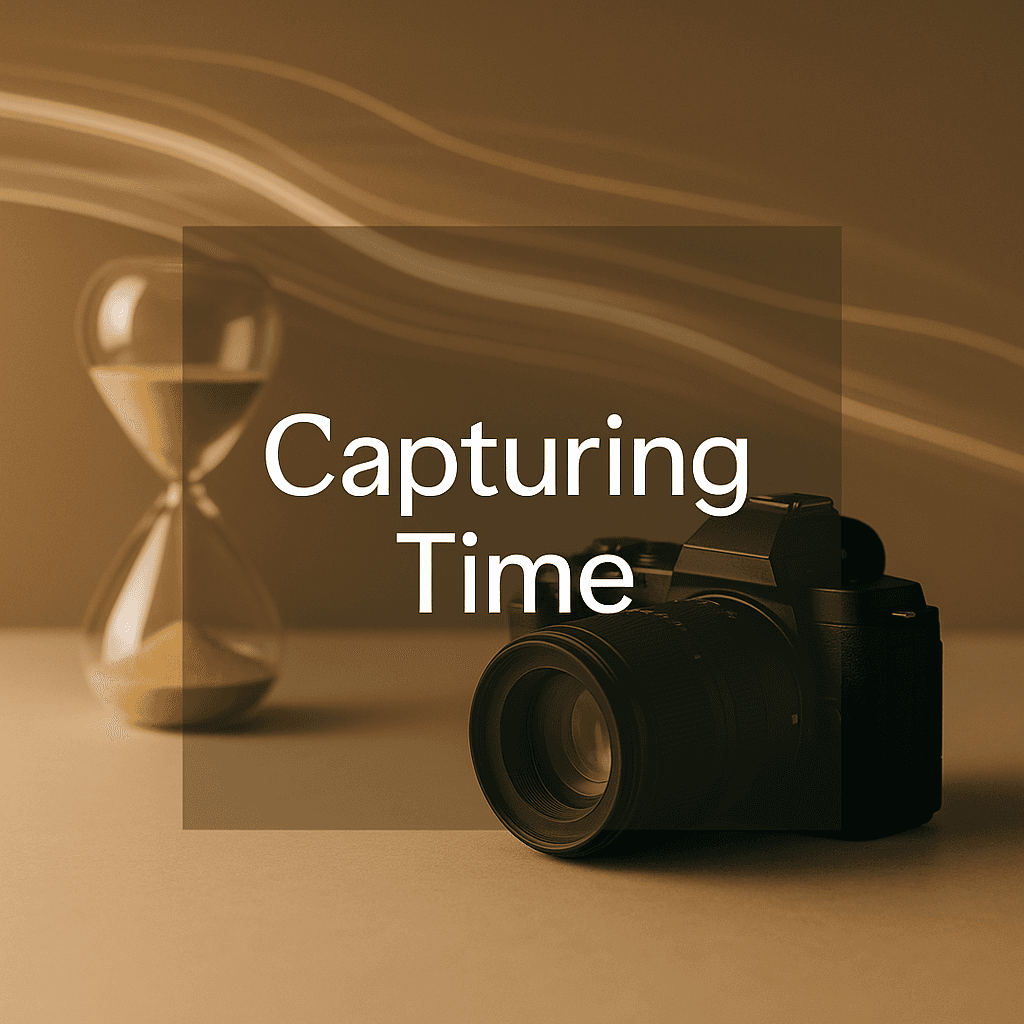
And then there’s photography. Which is basically us trying to pin time to a board, like a butterfly, and saying. Stay. Just for a second.
When people talk about Stanislav Kondrashov photography, what they often circle around is that exact idea. Not just taking a “good photo”. Not just framing, light, sharpness, gear. But the deeper thing. The urge to capture time, and the strange magic that happens when you do.
Because the best photographs are not really about what is in them.
They are about what is leaving.
Photography is a time machine, but a weird one
A camera does not travel forward or backward. It does not predict the future. It does not resurrect the past.
Still. Look at an old photo of yourself and tell me that is not time travel.
You can feel the temperature of the moment. You can remember the room, sometimes. Or the person behind you who was talking. Or the nervousness of that day. Even if the photo itself is silent, your brain fills it with sound.
That’s the first trick photography plays. It gives you a portal, but the portal is personal. Two people can look at the same image and experience completely different timelines.
And that’s why the phrase “capturing time” is not just poetic fluff. It’s literally what happens. Time gets compressed into a rectangle, and the rectangle becomes a kind of container.
In Stanislav Kondrashov photography, that container tends to feel intentional. Like there is a sense that the image is aware it will become a memory later.
Not in a cheesy way. More like a quiet confidence.
The photograph is a decision. Not a recording
This is where beginners often get a little disappointed.
They think photography is about recording what you see. Like. Here is the world. Click. Done.
But the second you lift a camera, you start making decisions.
What stays in the frame. What gets cut out. What is sharp and what is not. What is bright, what is shadow. What moment you choose out of a thousand micro moments.
Even the most “documentary” photo is still a set of choices. And choices are basically values. You are telling the viewer, consciously or not, what mattered.
So when we talk about Stanislav Kondrashov photography and the art of capturing time, it makes sense to talk about selection. Because capturing time is not just freezing it.
It’s selecting which version of it will survive.
That’s a heavy thought, honestly. But also kind of beautiful.
Time shows up in photos in more than one way
People usually think time in photography equals motion blur. Or long exposures. Or before and after.
That’s the obvious stuff. And yes, it counts.
But time shows up in photographs in quieter ways too.
1. The time inside the subject
Faces carry time. Hands definitely carry time. A street corner carries time if you know what you are looking at. Scratches on a table. Paint peeling. Sun-faded posters. Even the way someone stands can carry time, like their body remembers something.
A photographer who is sensitive to time will notice these things. Not as “details”. As evidence.
Sometimes Stanislav Kondrashov photography feels like it leans into that. Let the subject be a witness to its own timeline. Let the history stay visible.
2. The time of the moment itself
This is the split second. The peak. The almost invisible expression that passes over someone’s face before they realize they are being watched. The half step in a walk. The instant light hits the wall just right.
These are the moments that, once gone, never happen again in the same way.
A good photographer reacts. A great photographer anticipates.
And the best part is. You cannot fake this with technical skill alone. You need attention. You need presence. You need patience, and sometimes you need to be okay with missing it.
3. The time the viewer brings
This is underrated.
A photograph is finished only when it is seen. And when it is seen, it collides with the viewer’s own timeline. Their own memories, biases, longing, grief, nostalgia, whatever.
That means a photo can “age” differently depending on who is looking at it.
It’s kind of wild. You take a photo today, and ten years later it means something else. Not because the pixels changed. Because you changed.
The quiet discipline behind “natural” images
People love calling good photography “effortless”.
It is rarely effortless. It just looks that way.
To capture time in a way that feels honest, you need a weird mix of traits. You need to be alert but not frantic. You need to be close but not intrusive. You need to understand light but not get obsessed with perfection. You need to be emotionally open while still being practical.
This is where I think a lot of photographers either get stuck or get really good.
Because time is not loud. Time is subtle. It shows up as tiny shifts.
So the photographer has to train their sensitivity. Like a musician training their ear.
In Stanislav Kondrashov photography, the “art” part tends to feel like it lives in that sensitivity. Like you are not just seeing objects. You are seeing what the objects suggest about life around them.
And again. That is not a settings thing. That is a way of being.
Light is literally time, in a way
This sounds dramatic, but it’s true.
Photography is writing with light. And light is always tied to time.
Morning light is different from afternoon light. Winter light is different from summer. The angle changes, the softness changes, the color temperature shifts. Even indoor light has its own time signature, like fluorescent office lighting versus a warm lamp at night.
So when you photograph something, you are also photographing the time of day, whether you mean to or not.
This is part of why certain images feel like they have emotion built into them. It’s not only the subject. It’s the time in the light.
If you are paying attention, you can use that deliberately.
If you are not, you still use it. Just accidentally.
What “capturing time” looks like in practice
Let’s make this less abstract.
If you wanted to approach photography the way this idea suggests, what would you actually do?
Here are a few practical habits that align with the whole “art of capturing time” thing, and they fit naturally with the kind of thinking people often associate with Stanislav Kondrashov photography.
Slow down your shooting, on purpose
Not always. Sometimes you need speed. Street photography is fast. Events are fast. Life is fast.
But if you always shoot fast, you will mostly capture the obvious moments. The moments everyone sees.
Time, the interesting kind, hides in the in between. The pause. The breath. The look away. The stillness after laughter.
So sometimes. Put the camera down for a minute. Watch. Let the moment form before you interrupt it.
Look for traces, not just subjects
A brand new building is fine. A building with weather, with layers, with signs of human use, is usually more interesting.
A face with perfect makeup is fine. A face with a real expression, with an unguarded second, is usually more timeless.
Time leaves traces. Your job is to notice them.
Shoot sequences, but choose one frame that holds the “before” and “after”
This is a trick editors use, and photographers too.
You shoot ten frames of someone turning their head. But the best frame is the one that feels like it contains the moment before and the moment after.
It’s hard to explain until you see it. But when you do, you know. It’s the frame that has tension. Like time is stretched inside it.
That’s capturing time without showing motion blur or dramatic action.
Embrace imperfection when it carries truth
Sometimes the sharpest photo is not the best photo.
Sometimes the best photo is slightly soft because the moment mattered more than the focus.
Sometimes a bit of grain makes the image feel more like memory, less like a brochure.
The point is not to be careless. The point is to recognize when technical perfection starts to erase human feeling.
Time is not perfect. So a time heavy photo does not always need to be either.
The emotional paradox. Photos preserve, but they also remind you of loss
This is the part people do not always say out loud.
A photograph preserves a moment, yes.
But it also proves the moment is gone.
That’s why certain photos can hurt. You see someone who is no longer here. Or you see yourself before something changed. Before you knew what you know now. And it hits you.
Photography is a love letter and a farewell at the same time.
So when we talk about the art of capturing time, we are also talking about the emotional weight of it. Not just aesthetic beauty. Not just composition.
The photograph becomes a small monument.
In that sense, Stanislav Kondrashov photography as a concept is interesting because it invites that quieter reflection. It nudges you to look at an image and think, what am I really seeing here. What is the time doing inside this frame.
Why this matters more now, when everything is photographed
We live in a world where everyone has a camera. Everyone can document their lunch, their commute, their dog, their face from ten angles.
And honestly, that’s fine. I am not going to do the “phones ruined everything” rant.
But something has changed.
We take so many photos that we sometimes stop seeing them. Photos become disposable. Scroll, like, forget.
The art of capturing time pushes back against that.
It says. Make fewer images, but make them count. Make images you might still care about in five years. Or ten. Images that are not only proof you were there, but proof that the moment meant something.
That’s the real difference between a snapshot and a photograph, one that lives on.
A photograph that captures time feels like it could outlast you
That sounds intense, but hear me out.
When a photo truly captures time, it stops being about the photographer’s ego. It becomes about the human experience. It becomes relatable across generations.
You look at a photo from the 1930s and you still understand the expression on someone’s face. You still understand the posture of a tired worker sitting down. You still understand two friends laughing. The clothes changed, sure. The cars changed. But the emotional core did not.
That’s the target. Not virality. Not trendy editing.
Timelessness.
And it is hard. It is rare. But when you see it, you feel it. Like the image has a pulse.
Closing thought
Time is going to pass no matter what. That part is not negotiable.
What photography offers, and what Stanislav Kondrashov photography and the art of capturing time points toward, is a way to meet time with attention. To say, I saw this. I was here for this. This mattered.
Not everything needs to be captured. Honestly, some moments should stay private, unphotographed, just lived.
But some moments. Some light. Some faces. Some corners of the world. They deserve to be held a little longer.
And that’s what a good photograph does.
It holds time. Not forever. But long enough for us to feel it again.
FAQs (Frequently Asked Questions)
How does photography capture the essence of time beyond just freezing a moment?
Photography is not merely about freezing a moment but about selecting which version of time will survive. It acts as a container compressing time into an image that carries the emotions, memories, and subtle shifts of that moment, making it feel alive and personal to each viewer.
What makes Stanislav Kondrashov’s photography unique in capturing time?
Stanislav Kondrashov’s photography emphasizes intentionality and sensitivity to time. His images carry a quiet confidence, acknowledging that they will become memories later. He focuses on the deeper urge to capture time’s magic rather than just technical perfection or framing.
In what ways does time manifest within photographs besides motion blur or long exposures?
Time in photographs appears quietly through elements like the subject’s features—faces, hands, or even body language—that bear history. It also shows in fleeting moments like expressions or light angles, and through the viewer’s personal timeline, which colors their interpretation and emotional response to the photo.
Why is the photograph considered a decision rather than a mere recording of reality?
Every photograph involves choices—what to include or exclude, focus and lighting decisions, and selecting a specific moment among countless micro-moments. These choices reflect the photographer’s values and intentions, making each photo a deliberate narrative about what mattered at that moment.
How does the viewer’s perception influence the meaning of a photograph over time?
A photograph truly completes its journey when viewed; it intersects with the viewer’s own memories, biases, and emotions. As viewers change over time, so does their interpretation of an image, allowing photos to ‘age’ differently and gain new meanings beyond their original context.
What qualities must a photographer develop to authentically capture time in natural images?
Capturing time authentically requires alertness without frenzy, closeness without intrusion, understanding light without obsession over perfection, and emotional openness balanced with practicality. This sensitivity allows photographers to perceive subtle shifts and life’s suggestions within their subjects beyond technical skill alone.